%20--%3e%3cdefs%3e%3cstyle%3e%20.st0%20{%20fill:%20%231d1d1b;%20}%20%3c/style%3e%3c/defs%3e%3cpath%20class='st0'%20d='M174.5,69.9c-2.1-4.9-5.6-10.7-10.4-17.3-4.9-6.6-11-13.3-18.2-20-8.3-8.3-17.9-14.7-28.8-19-10.9-4.4-21.9-6.6-33-6.6s-23.7,2.7-33,8.1c-6.4,4.4-11.6,10.3-15.1,17.7-3.7,7.3-5.4,15.2-5.4,23.6,0,32.9,22.7,53.8,68,62.6,35.6,7,60.4,17.4,74.7,31.3,14.2,13.9,20.5,32.9,18.7,57-1.3,25.5-10.7,44.2-28.2,56.3-17.4,12.2-38.5,18.4-62.8,18.7-20-.2-38.3-3-55.2-8.1-16.9-5.2-31.2-12.6-43.1-22.1l-1.1-67.7c7.2,22.8,19.5,42,36.8,57.6,17.2,15.6,36.3,25.6,57.3,29.9,7.6,1.6,14.8,2.3,21.8,2.3,17.1,0,31.1-4.2,42.2-12.7,11-8.4,16.6-21.2,16.6-38.3s-6.4-30.7-19.5-43c-13-12.3-36.5-22.2-70.4-29.8-29.3-6.4-49.3-16.2-60.1-29.3-10.8-13.1-15.9-29.1-15.3-48,.2-14,4.2-26.3,12-37.1s18.4-19.2,31.9-25.2c13.4-6.1,28.8-9.1,45.9-9.1s28.2,1.9,41,5.7c12.8,3.8,23.7,8.3,32.5,13.8l.8,49h-.3Z'/%3e%3cpath%20class='st0'%20d='M269.3,250c0,11.1,3.7,18.4,10.9,22,7.2,3.4,14,5.2,20.2,5.2h-90.2c6.2,0,12.9-1.8,20-5.2,7.1-3.4,10.7-10.8,10.7-22V32.1c0-11.1-3.4-18.4-10.4-22-7-3.4-13.8-5.2-20.2-5.2h90.2c-6.4,0-13.3,1.8-20.5,5.2s-10.7,10.8-10.7,22v217.7h0ZM403.9,236.7c8.8,11.4,17.7,20.5,26.7,27.2,8.9,6.8,16.8,11.2,23.6,13.6l-53.7-.8c-9.1-8.3-18.2-18.6-27.6-30.7l-73.1-94.9c-2.3-3.1-5.3-4.7-8.9-4.7-6,0-12.4,3.7-19.5,10.9l90.6-108.5c5.7-6.8,8.6-13.4,8.6-20.2s-2-11.1-6-15.3-9.2-6.9-15.8-8h80.5c-2.3,0-7.6,1.7-15.8,5-8.1,3.3-17.7,9.9-28.6,19.5-4.9,4.4-13.1,13.6-24.7,27.6-11.6,14-21.6,26.3-30.1,36.9l-6.2,7.8c-5.7,5.7-8.6,11.1-8.6,16.3s1.9,8.4,5.8,13.6l82.8,104.6v.2Z'/%3e%3cpath%20class='st0'%20d='M516.2,248.4c0,11.7,3.7,19.3,11.1,23.1,7.3,3.8,14.3,5.7,20.8,5.7h-91.4c6.4,0,13.3-1.9,20.6-5.7s10.9-11.4,10.9-23.1V33.7c0-11.9-3.7-19.7-10.9-23.3s-14.1-5.4-20.6-5.4h91.4c-6.4,0-13.4,1.8-20.8,5.4-7.3,3.7-11.1,11.4-11.1,23.3v214.6h0Z'/%3e%3cpath%20class='st0'%20d='M770.2,243.3c4.9,13,10.8,21.7,17.4,26.2,6.8,4.6,12.7,7.1,17.9,7.6h-88.2c6.8-.8,12.4-2.9,17.1-6.2s7-8.1,7-14.3-.8-7.6-2.3-11.7l-28.8-80.9h-91l-25.7,70c-2.9,7.2-4.2,13.6-4.2,19,0,14.6,9.7,22.6,29.1,24.1h-72.4c8.8-.6,16.9-4.7,24.3-12.4,7.3-7.8,13.8-18.9,19.2-33.5L678-3.2l1.1,3.4,91,243.1ZM658.7,59.8c-1.9,4.4-4.6,11-8,19.8l-29.6,80.5h87.5l-30.7-87.5c-2.9-7.8-5.2-13-7.2-15.6-1.9-2.6-3.8-3.9-5.7-3.9s-4.4,2.2-6.4,6.6h.1Z'/%3e%3cpath%20class='st0'%20d='M1008.6,243.3c4.9,13,10.8,21.7,17.4,26.2,6.8,4.6,12.7,7.1,17.9,7.6h-88.2c6.8-.8,12.4-2.9,17.1-6.2s7-8.1,7-14.3-.8-7.6-2.3-11.7l-28.8-80.9h-91l-25.7,70c-2.9,7.2-4.2,13.6-4.2,19,0,14.6,9.7,22.6,29.1,24.1h-72.4c8.8-.6,16.9-4.7,24.3-12.4,7.3-7.8,13.8-18.9,19.2-33.5L916.3-3.2l1.1,3.4,91,243.1h.1ZM897.1,59.8c-1.9,4.4-4.6,11-8,19.8l-29.6,80.5h87.5l-30.7-87.5c-2.9-7.8-5.2-13-7.2-15.6-1.9-2.6-3.8-3.9-5.7-3.9s-4.4,2.2-6.4,6.6h.1Z'/%3e%3cpath%20class='st0'%20d='M1241.1,244.5c4.9,8.6,11,15.6,18.1,21s14.1,9.3,20.8,11.7h-47.8c-8-8-16.9-20.8-26.5-38.1l-37.3-63c-7.6-12.7-15.7-21-24.3-24.9s-19.6-5.8-32.5-5.8h-12.4v107.7c0,9.9,3.3,16.3,9.9,19.5s12.9,4.7,18.9,4.7h-87.9c6.4,0,13.2-1.8,20.2-5.2s10.4-10.8,10.4-22V32.1c0-11.1-3.6-18.4-10.7-22-7.1-3.4-13.8-5.2-20-5.2,10.3,0,25.5-.2,45.1-.8l37.7-.3c29,0,51.5,2.1,67.2,6.4,15.8,4.2,27.5,12.9,35,25.9,6.2,9.9,9.3,21.9,9.3,36.1s-2.4,22.2-7.3,32.5c-4.9,10.2-11.7,18.4-20.2,24.7-5.4,3.9-11.7,7.2-18.7,9.9s-13.4,4.3-19.5,4.9c4.7,1.3,9.6,4.2,14.8,8.9,5.2,4.7,11.1,13,17.9,24.9l39.7,66.5h0ZM1187.6,120.5c12.3-12.2,18.4-28.1,18.4-47.8s-7.4-42-22.3-51.6c-14.9-9.4-36.7-14.2-65.1-14.2s-15,.1-19.5.3v134.1c9.3,0,21.6-.2,36.6-.8,22.3-1.3,39.6-8,51.9-20.2h0Z'/%3e%3c/svg%3e)

Skis that fly at no extra cost, tickets seamlessly connecting flights and trains, helicopters capable of shortening the final leg of the journey, and an airport in Courchevel where landing demands extraordinary preparation. Reaching the great winter destinations is filled with nuances that can completely transform the experience.
There is a considerable difference between flying to a city and travelling to a ski resort. In the former case, the journey typically ends at baggage claim. In the latter, the airport is merely an intermediate stage: skis, boots, rail connections, road transfers, and occasionally several hours of transit still lie ahead before reaching the destination. A sequence of logistical decisions that rarely receives the same scrutiny as choosing the hotel or the resort itself.
The airline industry has spent decades refining its cabins, developing loyalty programmes, and elevating the standards of premium travel. Yet for those who regularly head to the snow, some of the most valuable benefits remain outside the aircraft. The ability to carry sports equipment without surcharges, book a train within the same itinerary, or land at an airport close to the resort can have a greater impact than any of the amenities traditionally associated with luxury.
And in that arena, not all carriers deliver the same.
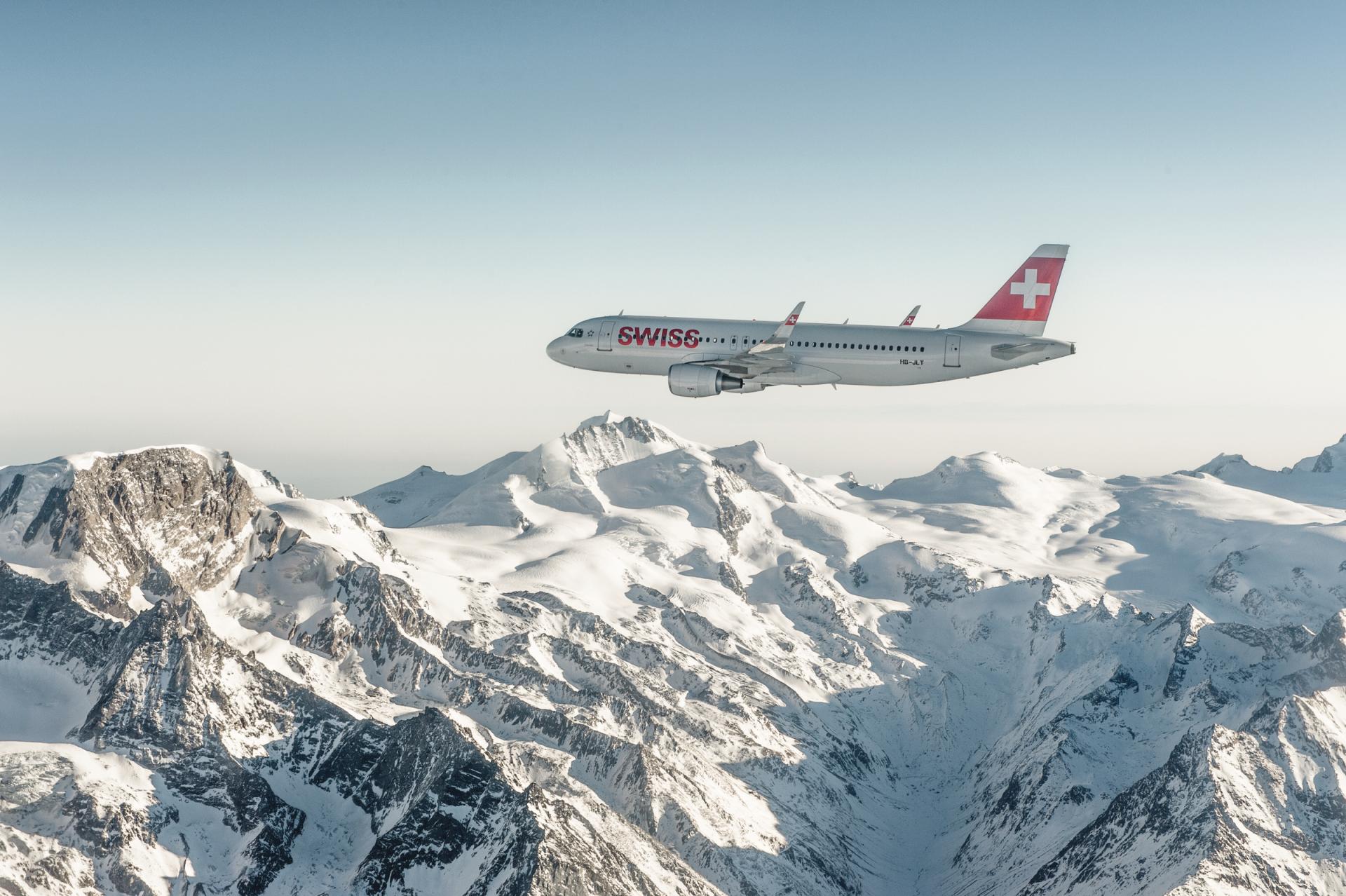
SWISS: When Skis Have Their Own Ticket
There is something distinctly coherent about a Swiss airline designing a baggage policy tailored to winter tourism. In a country where skiing forms part of the national identity and represents a cornerstone of the economy, carrying sports gear should hardly be treated as an exceptional circumstance.
SWISS allows one set of ski or snowboard equipment to be carried free of charge on numerous eligible routes and fares, even when passengers have already utilised their standard checked baggage allowance. The policy entails specific conditions, weight limits, and exceptions, particularly on certain economy fares. It is therefore advisable to verify both the fare and the operating carrier prior to booking.
It is an advantage that may seem secondary until one compares the final price of two ostensibly equivalent tickets. A ski bag, boots, and the rest of the gear can incur a substantial surcharge on certain airlines. When travelling as a family or group of friends, that financial disparity is no longer negligible.
Yet SWISS does not stop at baggage. Through SWISS Air Rail, the carrier integrates select rail journeys into the same flight booking, offering connections to destinations such as St. Moritz, Davos, Visp, or Sion. The concept stems from a simple premise: the journey does not necessarily end where the aircraft touches down. Consolidating the transit to the Alps within a single itinerary removes common logistical friction, though baggage handling between transport modes and individual connection terms must be verified separately.
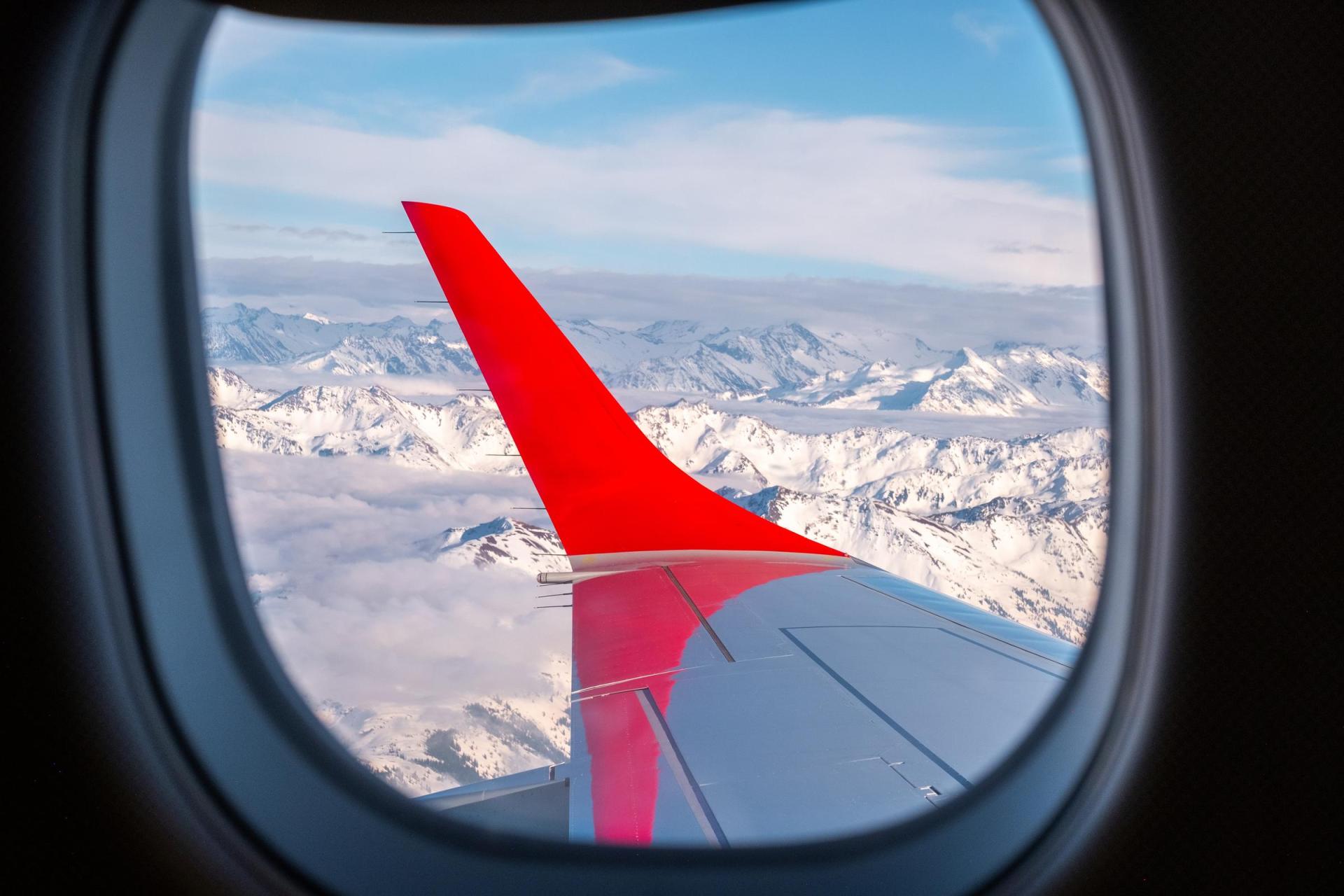
Lufthansa and Austrian: Other Ways to Simplify Winter Travel
It would be remiss to present SWISS as the sole airline mindful of the winter traveller’s needs. Lufthansa and Austrian Airlines also allow complimentary transport of ski or snowboard equipment on select fares and routes, albeit with restrictions that vary depending on the itinerary, booked class, and operating carrier.
Here, the distinction lies in the fine print. Entry-level fares, routes serving specific international markets, and codeshare flights can alter the conditions. The recommendation is to compare the total journey cost rather than just the base fare.
Austrian occupies a particularly advantageous position within Alpine tourism. Its network into Austria and access to airports such as Innsbruck or Salzburgo allow travellers to reach regions where some of Europe’s most renowned resorts lie within relatively short driving distances. Lufthansa, for its part, turns Múnich into a key gateway to Tirol, Kitzbühel, and other central Alpine destinations.
Choosing an airline thus hinges on a far more pragmatic consideration: not merely where it lands, but how much it simplifies everything that follows.
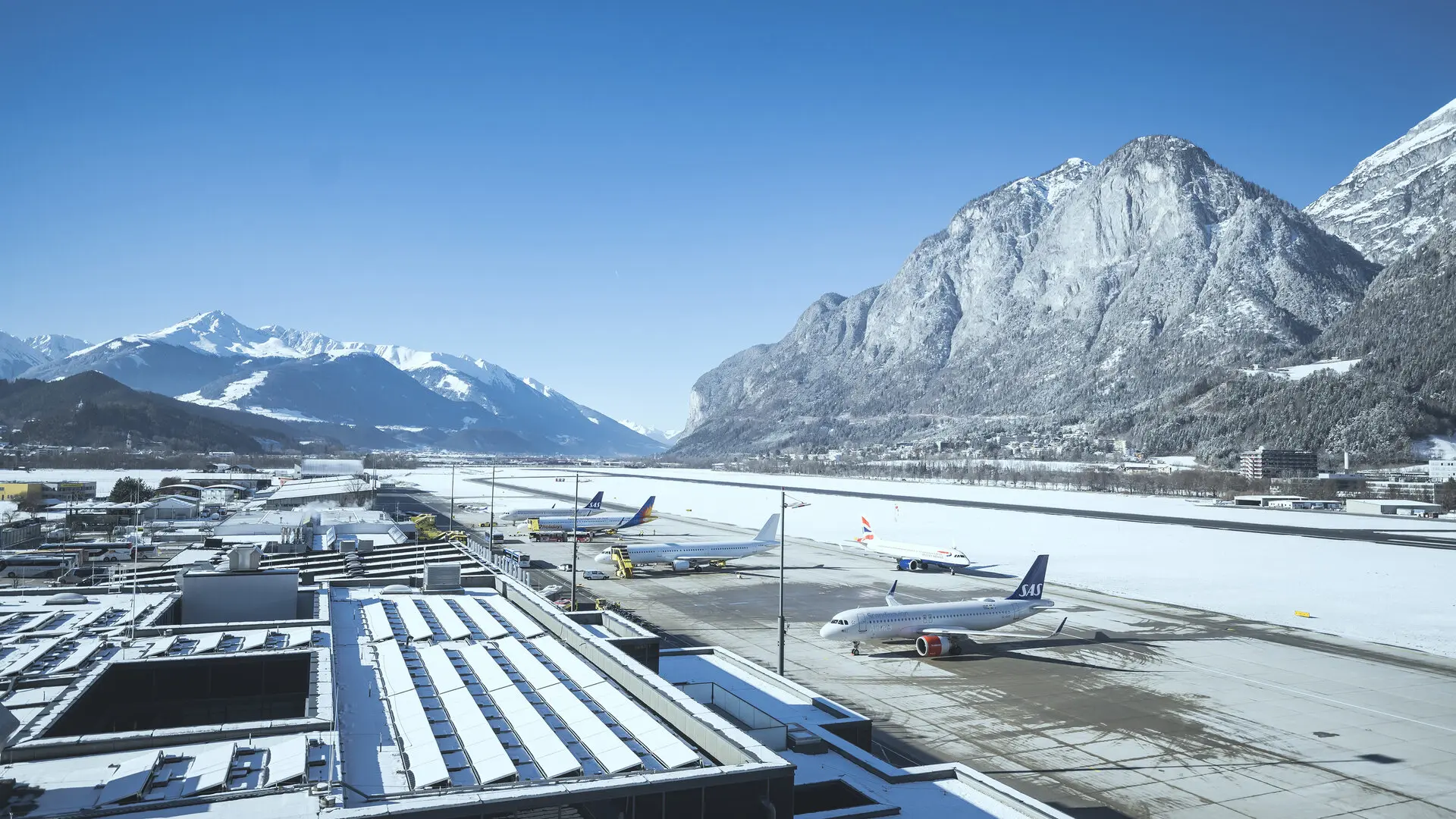
The Right Airport Can Be Worth More Than the Finest Cabin
For years, the discourse surrounding premium travel has been dominated by the onboard experience: fully flat seats, signature gastronomy, lounges, and bespoke services. Yet when the destination is a ski resort, geography can carry far more weight than any of these attributes.
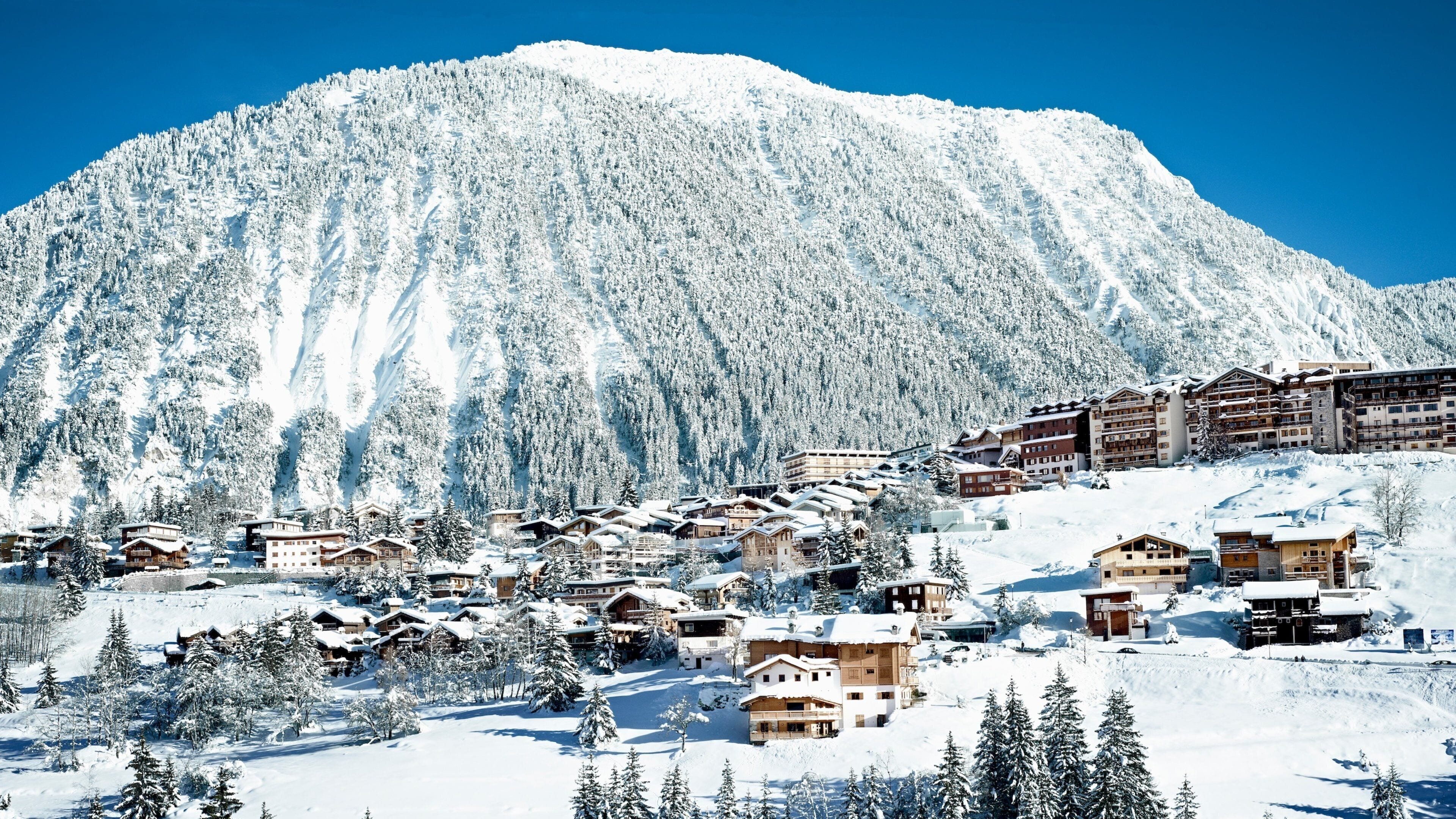
Ginebra remains one of the primary gateways to the French Alps and western Switzerland. Zúrich provides access to the east of the country and resorts such as St. Moritz, Davos, or Laax. Innsbruck holds an exceptionally favourable position for numerous Tirol resorts, while Salzburgo offers compelling alternatives for Austrian ski regions. Chambéry, with a more limited and seasonal flight schedule, grants immediate access to Courchevel, Méribel, and other destinations across Les Trois Vallées.
Here lies one of the recurring paradoxes of winter travel: the cheapest flight is not always the most efficient route. An additional connection, a more distant airport, or an ill-coordinated ground transfer can quickly erase any initial savings. For those with limited days on the mountain, losing three extra hours in transit can prove costlier than the fare difference between two flights.
The question, then, should not solely be the cost of flying to a given city, but the actual investment of time and money required to reach the hotel.
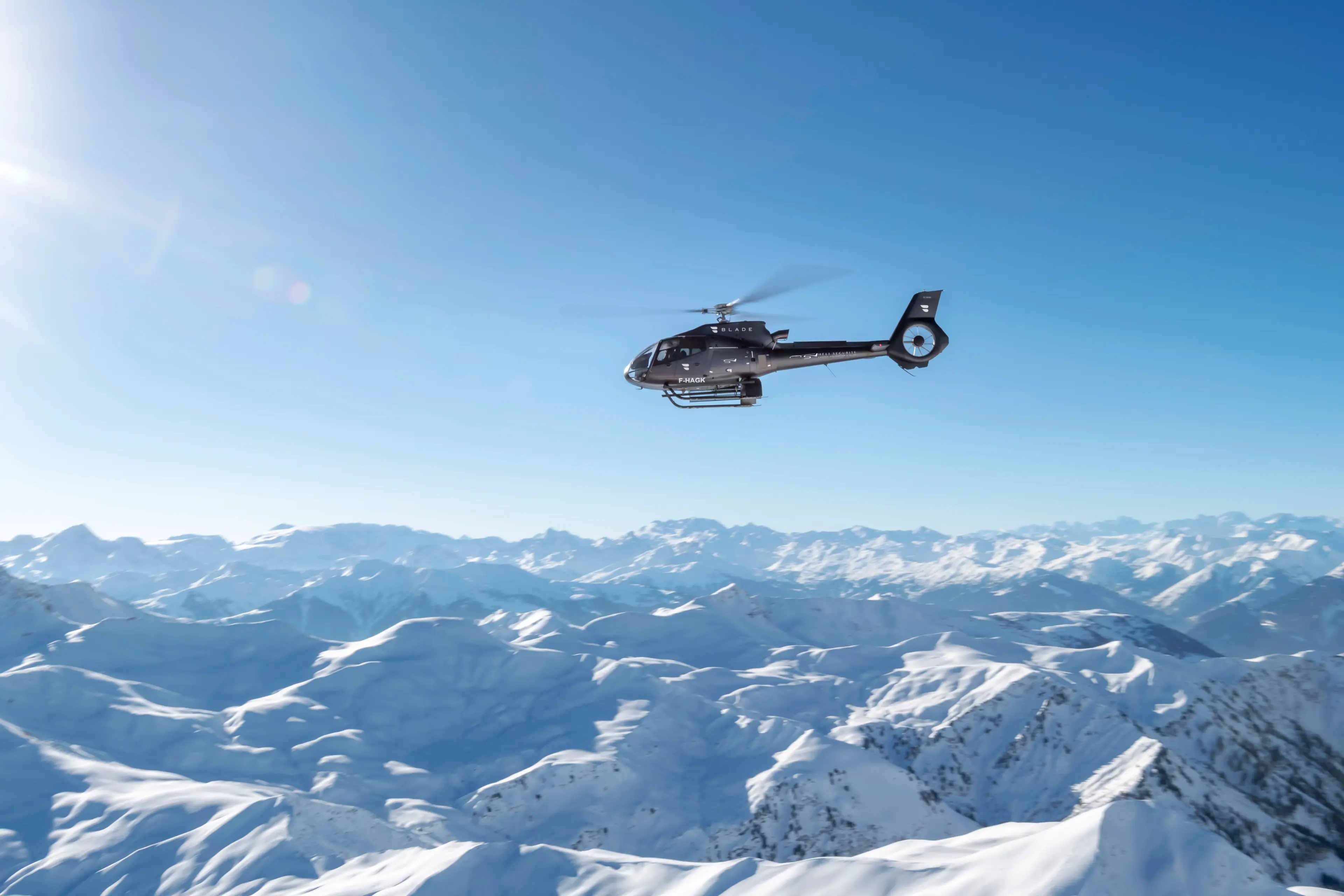
From Runway to Resort: When the Final Leg Is by Helicopter
In the Alps, distance is not always measured in kilometres. Mountain roads, weather conditions, and peak-weekend traffic can turn a relatively short journey into a protracted affair. It is precisely across this final leg that the helicopter has carved out a niche in premium mobility.
Ginebra serves as one of the primary departure points. From its international airport, specialised private flight operators connect to some of the most celebrated resorts in France and Switzerland. Companies such as Mont Blanc Hélicoptères provide aerial transfer services subject to clearances, weather conditions, and operational availability.
The contrast can be striking. Certain operators advertise flights between Ginebra and Courchevel in approximately fifteen minutes, compared to the several hours often required by road. Private connections also operate to Verbier and other Alpine destinations, though published flight times account strictly for airborne transit rather than the door-to-door transfer from terminal to hotel.
In the Swiss Valais, Air Zermatt offers private transfers to the Zermatt region from various points across the country. On certain flights, luggage may require separate transport by road—an important consideration when travelling with bulky sports equipment.
Helicopters are by no means a universal solution. Their operations are strictly dictated by weather, airspace constraints, landing authorisations, and aircraft availability. Added to this are substantial costs and an environmental footprint per passenger considerably higher than that of ground-based public transit. Yet for certain travellers, condensing a multi-hour drive into a few minutes of flight time can prove decisive.
In this segment, luxury is no longer defined solely by comfort; it is measured in time.
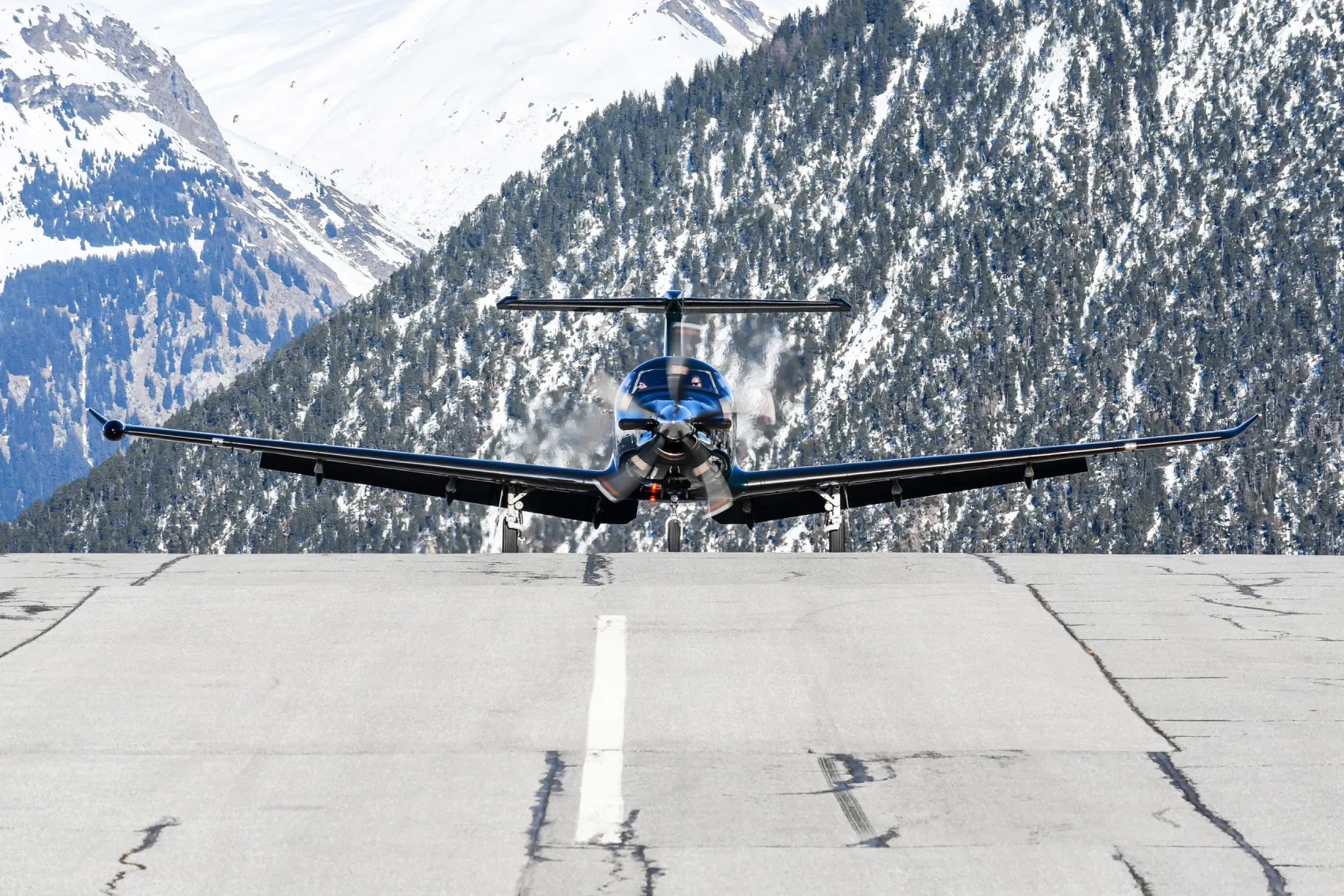
Courchevel Altiport: A Runway That Defies Conventional Aviation Rules
Some airports stand out for their architecture, others for their capacity, and a select few for the sheer complexity of their operations. Courchevel Altiport belongs to a category entirely its own. Perched at an altitude of 2,007 metres in one of the world's premier ski destinations, it is an infrastructure where mountain conditions dictate every facet of flight operations.
Inaugurated in 1961, the aerodrome was conceived to bring aviation to a region where overland access was exceptionally demanding. Its original runway, measuring a mere 375 metres, was extended for the 1992 Albertville Olympic Games. Today, it spans 537 metres in length and 40 metres in width, featuring an upward gradient of approximately 18.5%.
At first glance, the slope appears to be an obstacle. In reality, it is integral to the technical design. Aircraft land uphill, harnessing the gradient to shorten braking distance, and take off downhill, using the incline to aid acceleration. Yet this configuration demands extraordinary precision: the approach winds through mountainous terrain, with natural obstacles, shifting winds, and virtually zero margin to abort once past key decision points.
This is not an airfield where any private pilot can touch down merely by virtue of possessing an appropriate aircraft. Operations are governed by stringent requirements concerning training, experience, and certification. The French Direction Générale de l'Aviation Civile establishes specific prerequisites for accessing altiports, precisely because of the demanding nature of their runways and surrounding terrain.
Which Aircraft Can Actually Land at Courchevel?
The image of a large business jet landing directly alongside the slopes of Courchevel may hold aesthetic appeal, but it does not reflect the aerodrome's operational reality. The Altiport does not accommodate scheduled commercial flights from major airlines, nor is it engineered for conventional private jets.
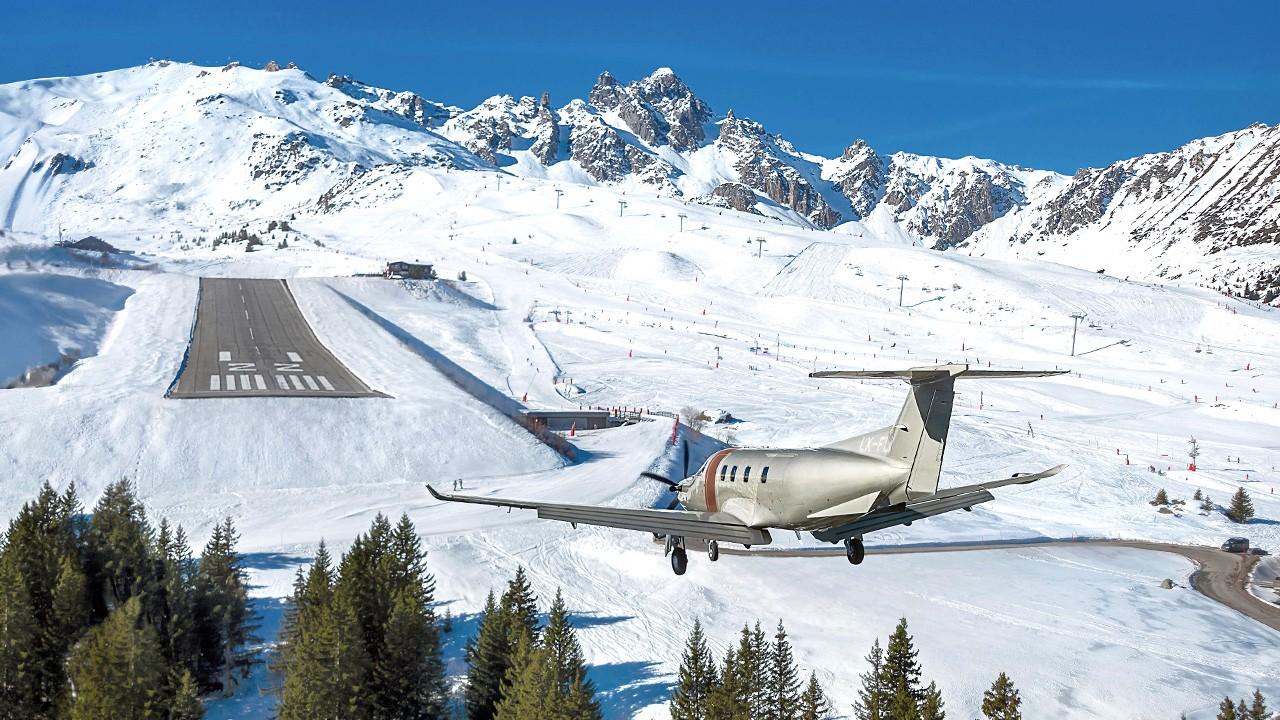
Traffic is concentrated on helicopters and light aircraft engineered to handle the demands of a short, steep runway. Selected turboprops, including models specialised in mountain operations, can utilise the facilities provided they meet applicable technical and regulatory parameters. An aircraft’s suitability is not determined by size alone: performance, configuration, weight, prevailing weather, and crew type ratings all play a critical role.
Helicopter traffic accounts for a particularly substantial share. According to figures published by the Courchevel Town Hall, approximately 70% of winter movements involve rotary-wing aircraft. The infrastructure features reception facilities, hangars, refuelling stations, and flight information services tailored to its operations.
Nor is the airport accessible around the clock. Night flights are prohibited, and strict operating hours, traffic patterns, and procedures apply. Compounding this is a fundamental reality: keeping a runway of this nature operational throughout the winter requires relentless snow clearing—a task of immense complexity above two thousand metres.
The true uniqueness of Courchevel does not lie in merely enabling arrivals at a ski resort by air. It lies in having developed an extraordinarily specialised aeronautical infrastructure to make it possible.
Private Aviation: When Time Becomes the Ultimate Argument
Courchevel is an exceptional case, but by no means the only destination where private aviation plays a pivotal role. Samedan Airport in Switzerland’s Engadina region is among the most prominent examples. Its proximity to St. Moritz significantly curtails road transfers from major international hubs, offering an alternative for business aircraft compatible with its operational parameters.
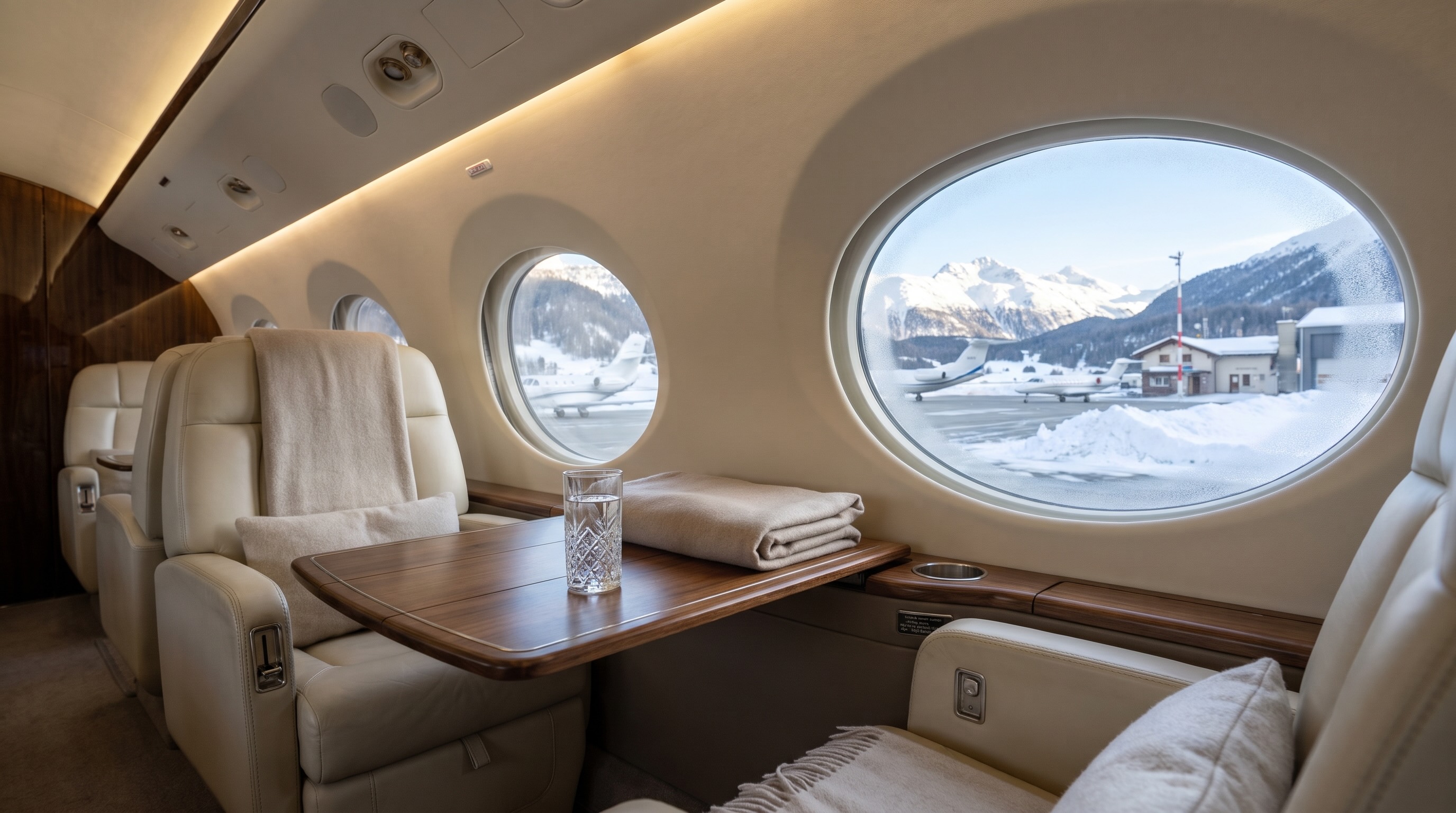
In this market, companies such as VistaJet and NetJets have built their offerings around flexibility, bespoke service, and access to a broader airport network than that typically served by commercial aviation. This does not mean every aircraft model can operate out of every Alpine airfield. Altitude, runway length, terrain, and weather continue to impose definitive constraints.
The ability to schedule bespoke departures, bypass connecting flights, and coordinate ground transfers with precision can transform a brief escape. However, the efficiency of private aviation should be understood primarily in terms of time and flexibility. Its financial cost and emissions per passenger remain significantly higher than those of commercial air travel.
This is an essential distinction at a time when Alpine destinations face the dual challenge of preserving connectivity while addressing the environmental footprint of leisure travel.
Japan and North America: A Different Approach to Journey Planning
The equation shifts when the destination lies beyond Europe. Travelling to Niseko, Aspen, or Jackson Hole introduces distinct variables: intercontinental flights, domestic connections, regional airfields, and baggage policies that can vary across different carriers within a single itinerary.
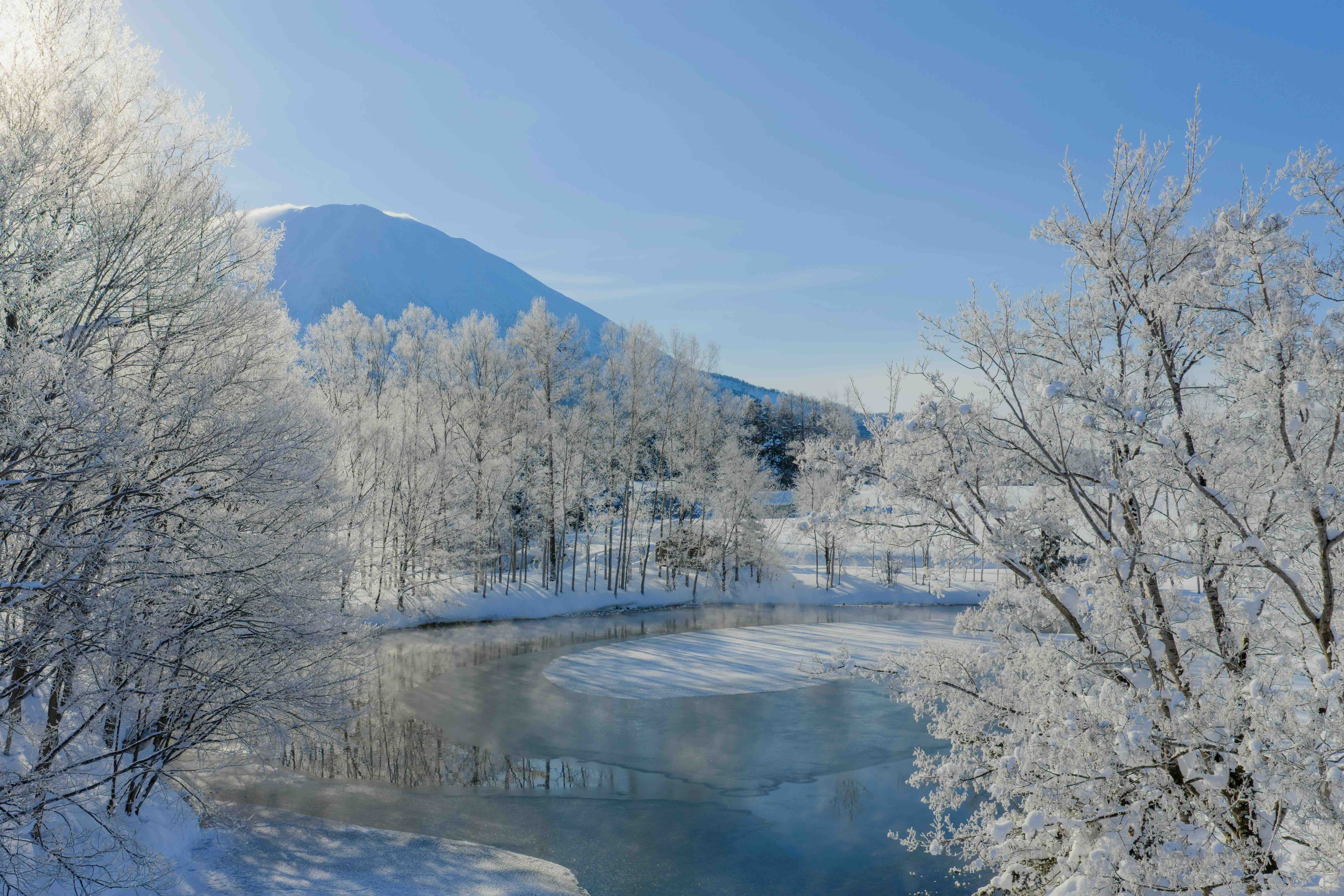
In Japan, New Chitose Airport near Sapporo serves as the primary gateway to Hokkaido. Carriers such as Japan Airlines and ANA operate robust domestic networks for travellers connecting from major international gateways. However, transporting sports equipment may be subject to weight limits, dimension caps, and conditions distinct from those enforced on European routes.
In the United States, United Airlines and Delta Air Lines represent the primary options for accessing mountain destinations via their domestic networks. Airports such as Aspen/Pitkin County or Jackson Hole bring travellers close to the resort, though winter weather and regional operational realities can trigger last-minute schedule changes.
In these destinations, securing a well-orchestrated connection can prove far more valuable than shaving a modest amount off the airfare. Particular care should also be taken with codeshare tickets issued by one airline but operated by another: the terms governing sports equipment are not always what passengers anticipate.
Baggage: The Detail That Still Sets Airlines Apart
Few details illustrate the disparity among airlines more clearly than the carriage of ski equipment. For a conventional passenger, an extra suitcase is an option. For those travelling with their own gear, skis, boots, and helmet are indispensable elements of the journey.
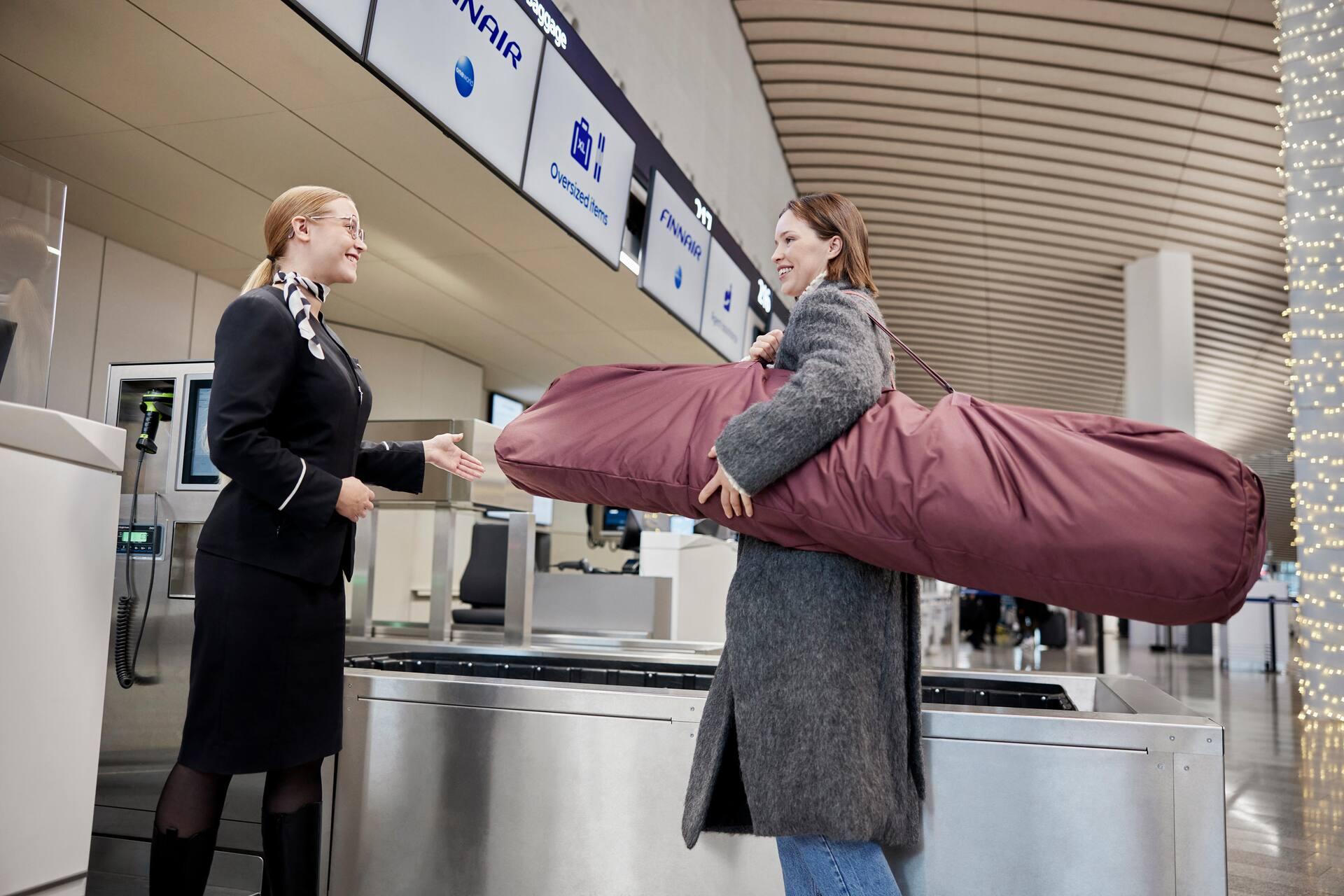
Policies vary considerably. Some airlines permit one set of equipment at no additional charge beyond the standard allowance; others absorb it into the checked baggage quota, while certain fare tiers impose dedicated surcharges. Restrictions on length, weight, and piece counts also apply, particularly when the journey spans multiple carriers.
In the case of SWISS, the airline specifies that complimentary gear may comprise skis or a snowboard, boots, poles, and a helmet, within defined limits. This benefit does not extend to all fare classes or flight combinations.
The advice is straightforward: before comparing two tickets, calculate the true cost of transporting all equipment. An ostensibly cheaper fare often loses its edge once round-trip baggage fees are factored in.
There is also an alternative gaining traction among discerning travellers: shipping equipment in advance or renting high-end gear directly in the resort. While not always the most economical route, it dramatically simplifies transit, particularly when an itinerary encompasses multiple cities or rail transfers.
The New Luxury Is Arriving Better
The most compelling evolution in winter travel is perhaps not about flying faster, but about seamlessly connecting every stage of the journey. An airline that carries skis without surcharges, a ticket integrating a rail leg, an airport that curtails ground transfer times, or a helicopter that bypasses hours of mountain roads all answer, from vastly different angles, the very same demand: eliminating friction.
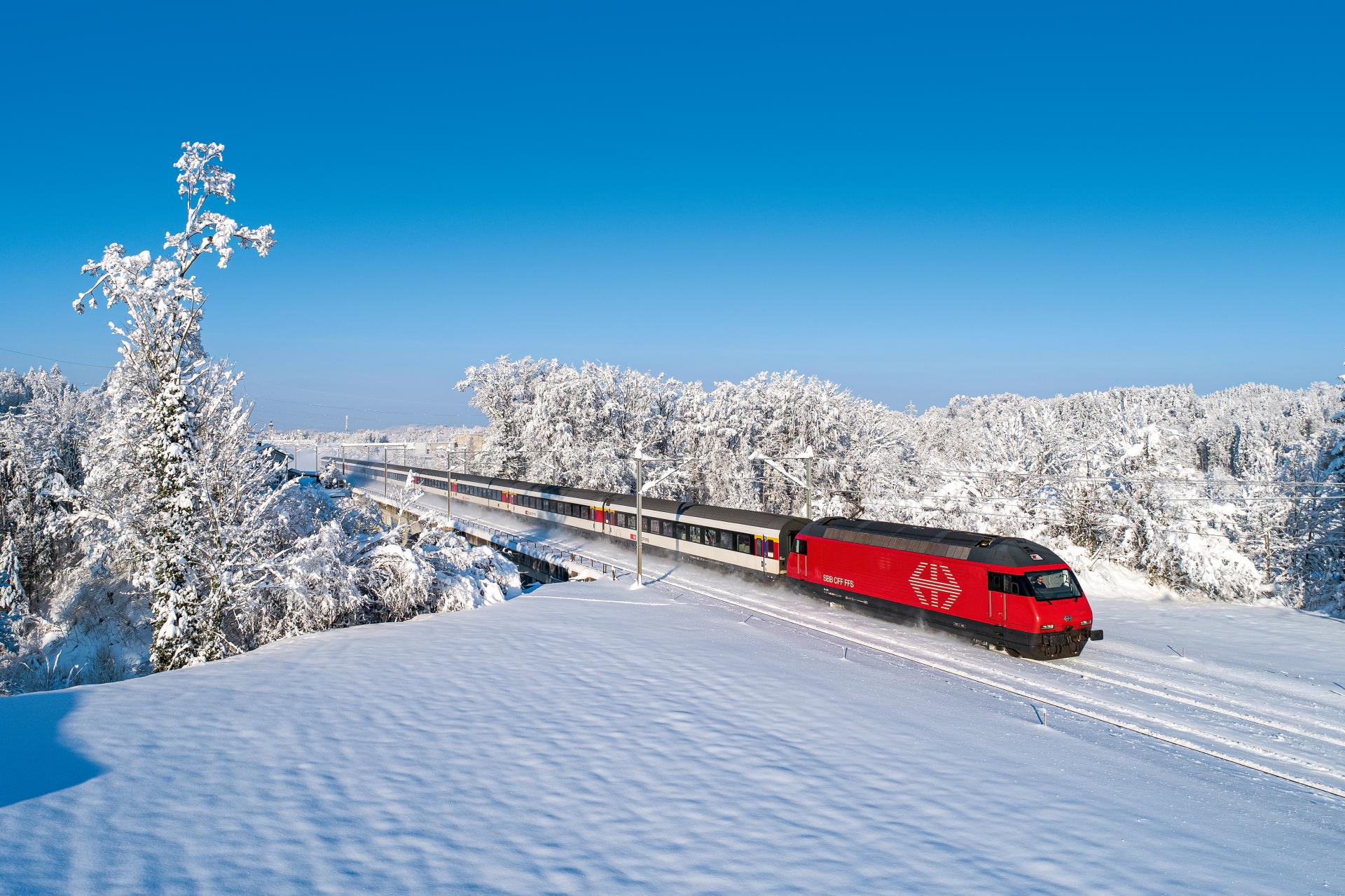
These solutions are neither equivalent nor aimed at the same profile of traveller. Some conserve capital; others, time. Certain options offer greater flexibility, while public transit presents tangible economic and environmental advantages. Efficiency cannot be reduced to a single definition.
For those planning multiple getaways across the season, choosing an airline should begin well before selecting a seat. It should encompass baggage, connections, the arrival airport, and the final stretch to the resort.
Because ultimately, the finest travel experience does not always begin in Business Class nor conclude upon touchdown. It begins when every phase of the itinerary works seamlessly, freeing the traveller to focus on the very reason they flew: being on the snow.