%20--%3e%3cdefs%3e%3cstyle%3e%20.st0%20{%20fill:%20%231d1d1b;%20}%20%3c/style%3e%3c/defs%3e%3cpath%20class='st0'%20d='M174.5,69.9c-2.1-4.9-5.6-10.7-10.4-17.3-4.9-6.6-11-13.3-18.2-20-8.3-8.3-17.9-14.7-28.8-19-10.9-4.4-21.9-6.6-33-6.6s-23.7,2.7-33,8.1c-6.4,4.4-11.6,10.3-15.1,17.7-3.7,7.3-5.4,15.2-5.4,23.6,0,32.9,22.7,53.8,68,62.6,35.6,7,60.4,17.4,74.7,31.3,14.2,13.9,20.5,32.9,18.7,57-1.3,25.5-10.7,44.2-28.2,56.3-17.4,12.2-38.5,18.4-62.8,18.7-20-.2-38.3-3-55.2-8.1-16.9-5.2-31.2-12.6-43.1-22.1l-1.1-67.7c7.2,22.8,19.5,42,36.8,57.6,17.2,15.6,36.3,25.6,57.3,29.9,7.6,1.6,14.8,2.3,21.8,2.3,17.1,0,31.1-4.2,42.2-12.7,11-8.4,16.6-21.2,16.6-38.3s-6.4-30.7-19.5-43c-13-12.3-36.5-22.2-70.4-29.8-29.3-6.4-49.3-16.2-60.1-29.3-10.8-13.1-15.9-29.1-15.3-48,.2-14,4.2-26.3,12-37.1s18.4-19.2,31.9-25.2c13.4-6.1,28.8-9.1,45.9-9.1s28.2,1.9,41,5.7c12.8,3.8,23.7,8.3,32.5,13.8l.8,49h-.3Z'/%3e%3cpath%20class='st0'%20d='M269.3,250c0,11.1,3.7,18.4,10.9,22,7.2,3.4,14,5.2,20.2,5.2h-90.2c6.2,0,12.9-1.8,20-5.2,7.1-3.4,10.7-10.8,10.7-22V32.1c0-11.1-3.4-18.4-10.4-22-7-3.4-13.8-5.2-20.2-5.2h90.2c-6.4,0-13.3,1.8-20.5,5.2s-10.7,10.8-10.7,22v217.7h0ZM403.9,236.7c8.8,11.4,17.7,20.5,26.7,27.2,8.9,6.8,16.8,11.2,23.6,13.6l-53.7-.8c-9.1-8.3-18.2-18.6-27.6-30.7l-73.1-94.9c-2.3-3.1-5.3-4.7-8.9-4.7-6,0-12.4,3.7-19.5,10.9l90.6-108.5c5.7-6.8,8.6-13.4,8.6-20.2s-2-11.1-6-15.3-9.2-6.9-15.8-8h80.5c-2.3,0-7.6,1.7-15.8,5-8.1,3.3-17.7,9.9-28.6,19.5-4.9,4.4-13.1,13.6-24.7,27.6-11.6,14-21.6,26.3-30.1,36.9l-6.2,7.8c-5.7,5.7-8.6,11.1-8.6,16.3s1.9,8.4,5.8,13.6l82.8,104.6v.2Z'/%3e%3cpath%20class='st0'%20d='M516.2,248.4c0,11.7,3.7,19.3,11.1,23.1,7.3,3.8,14.3,5.7,20.8,5.7h-91.4c6.4,0,13.3-1.9,20.6-5.7s10.9-11.4,10.9-23.1V33.7c0-11.9-3.7-19.7-10.9-23.3s-14.1-5.4-20.6-5.4h91.4c-6.4,0-13.4,1.8-20.8,5.4-7.3,3.7-11.1,11.4-11.1,23.3v214.6h0Z'/%3e%3cpath%20class='st0'%20d='M770.2,243.3c4.9,13,10.8,21.7,17.4,26.2,6.8,4.6,12.7,7.1,17.9,7.6h-88.2c6.8-.8,12.4-2.9,17.1-6.2s7-8.1,7-14.3-.8-7.6-2.3-11.7l-28.8-80.9h-91l-25.7,70c-2.9,7.2-4.2,13.6-4.2,19,0,14.6,9.7,22.6,29.1,24.1h-72.4c8.8-.6,16.9-4.7,24.3-12.4,7.3-7.8,13.8-18.9,19.2-33.5L678-3.2l1.1,3.4,91,243.1ZM658.7,59.8c-1.9,4.4-4.6,11-8,19.8l-29.6,80.5h87.5l-30.7-87.5c-2.9-7.8-5.2-13-7.2-15.6-1.9-2.6-3.8-3.9-5.7-3.9s-4.4,2.2-6.4,6.6h.1Z'/%3e%3cpath%20class='st0'%20d='M1008.6,243.3c4.9,13,10.8,21.7,17.4,26.2,6.8,4.6,12.7,7.1,17.9,7.6h-88.2c6.8-.8,12.4-2.9,17.1-6.2s7-8.1,7-14.3-.8-7.6-2.3-11.7l-28.8-80.9h-91l-25.7,70c-2.9,7.2-4.2,13.6-4.2,19,0,14.6,9.7,22.6,29.1,24.1h-72.4c8.8-.6,16.9-4.7,24.3-12.4,7.3-7.8,13.8-18.9,19.2-33.5L916.3-3.2l1.1,3.4,91,243.1h.1ZM897.1,59.8c-1.9,4.4-4.6,11-8,19.8l-29.6,80.5h87.5l-30.7-87.5c-2.9-7.8-5.2-13-7.2-15.6-1.9-2.6-3.8-3.9-5.7-3.9s-4.4,2.2-6.4,6.6h.1Z'/%3e%3cpath%20class='st0'%20d='M1241.1,244.5c4.9,8.6,11,15.6,18.1,21s14.1,9.3,20.8,11.7h-47.8c-8-8-16.9-20.8-26.5-38.1l-37.3-63c-7.6-12.7-15.7-21-24.3-24.9s-19.6-5.8-32.5-5.8h-12.4v107.7c0,9.9,3.3,16.3,9.9,19.5s12.9,4.7,18.9,4.7h-87.9c6.4,0,13.2-1.8,20.2-5.2s10.4-10.8,10.4-22V32.1c0-11.1-3.6-18.4-10.7-22-7.1-3.4-13.8-5.2-20-5.2,10.3,0,25.5-.2,45.1-.8l37.7-.3c29,0,51.5,2.1,67.2,6.4,15.8,4.2,27.5,12.9,35,25.9,6.2,9.9,9.3,21.9,9.3,36.1s-2.4,22.2-7.3,32.5c-4.9,10.2-11.7,18.4-20.2,24.7-5.4,3.9-11.7,7.2-18.7,9.9s-13.4,4.3-19.5,4.9c4.7,1.3,9.6,4.2,14.8,8.9,5.2,4.7,11.1,13,17.9,24.9l39.7,66.5h0ZM1187.6,120.5c12.3-12.2,18.4-28.1,18.4-47.8s-7.4-42-22.3-51.6c-14.9-9.4-36.7-14.2-65.1-14.2s-15,.1-19.5.3v134.1c9.3,0,21.6-.2,36.6-.8,22.3-1.3,39.6-8,51.9-20.2h0Z'/%3e%3c/svg%3e)
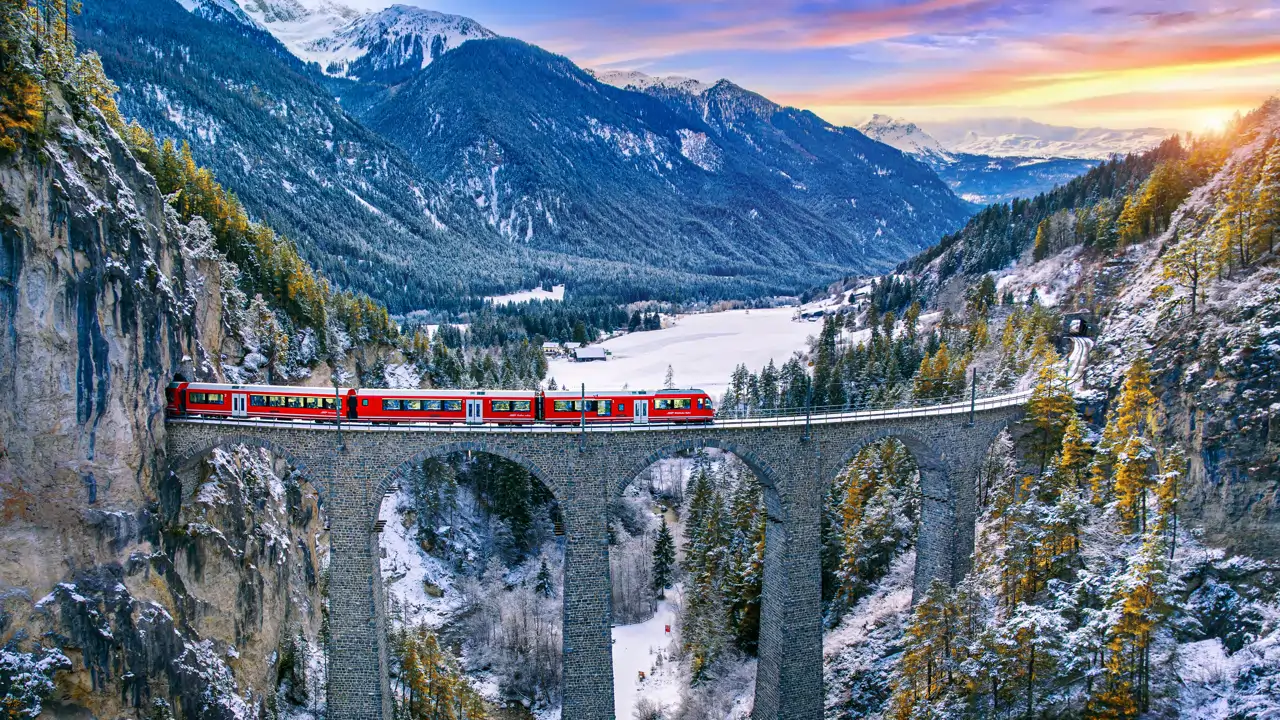
A slow and scenic journey across the Swiss Alps, amidst engineering, landscape, and railway elegance.
The Glacier Express connects St. Moritz and Zermatt across 291 kilometers of the Swiss mountain range. Eight hours of travel traversing remote valleys, deep gorges, high mountain passes, and alpine villages, where the landscape dictates the journey's pace.
Inaugurated in 1930, it has been accompanied for decades by a nickname: the slowest express in the world. Eight hours to cross Switzerland from east to west, with the landscape setting the pace. Here, the journey matters more than the destination.
The itinerary crosses the country from east to west, relying on rivers and alpine passes to navigate rugged terrain. Young rivers guide it through canyons, while rack sections allow it to gain altitude, reaching over 2,000 meters at the Oberalp Pass. In total, the Glacier Express traverses 91 tunnels and more than 290 bridges, in a constant succession of technical solutions designed to tame a complex territory.
It is part of the Grand Train Tour of Switzerland and shares the spotlight with other historic lines such as the Bernina Express or the Gotthard Panorama Express, though its transversal route makes it one of the most comprehensive.
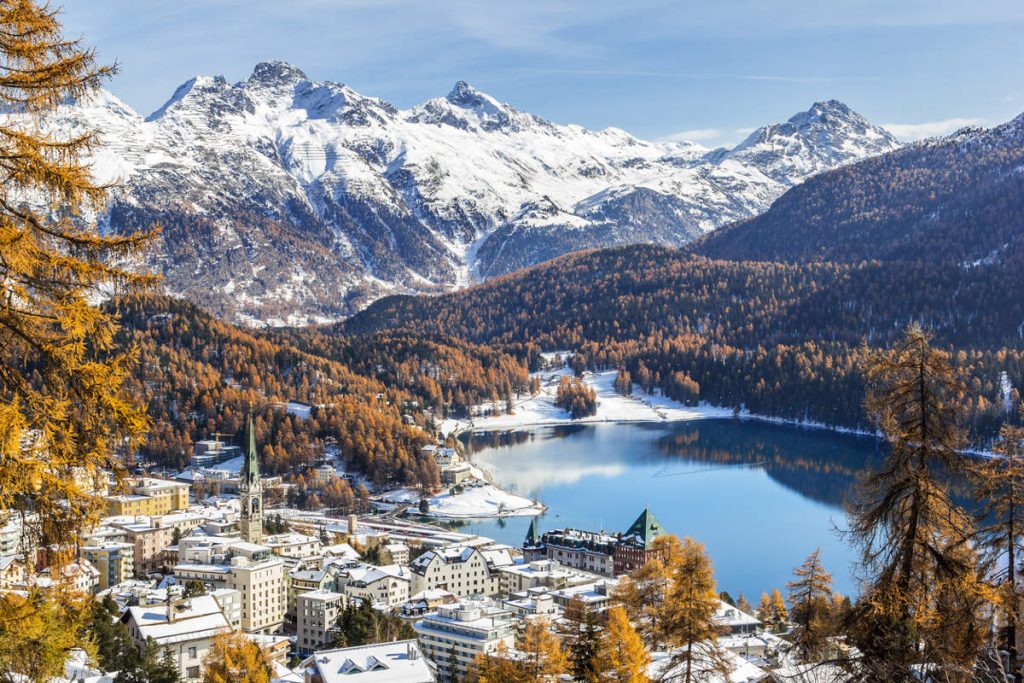
St. Moritz, start of the journey
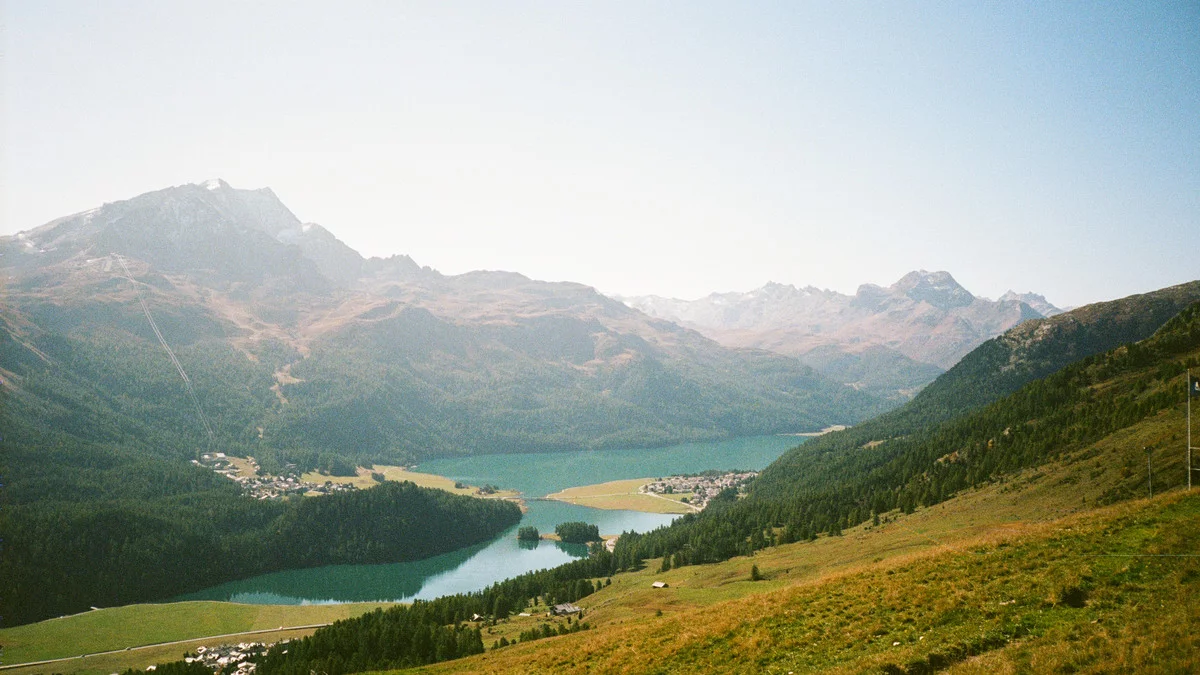
The departure from St. Moritz sets the tone from the very beginning. The resort combines historic hotels, boutiques, and contemporary architecture with surroundings dominated by lakes and peaks exceeding 2,400 meters. Before boarding the train, the town invites a leisurely stroll among leaning churches, centuries-old patisseries, and viewpoints over the lake.
On the platform, a silent anticipation is palpable. The journey begins even before you take your seat.
The carriages are designed to miss no detail. Panoramic windows and glass roofs eliminate any visual interruption with the outside. The spacious seats, oriented towards the landscape, transform the journey into a continuous experience of observation.
The audio guide accompanies the route with precise and brief explanations, while the connectivity system allows access to additional information and supplementary content. For those seeking a higher level of comfort, Excellence Class includes concierge service, refined gastronomy, and personalized attention throughout the journey.
Albula and Landwasser
One of the most memorable stretches is the Albula Line, inaugurated in the early 20th century and recognized as a World Heritage site. Here, the train overcomes elevation changes via helical tunnels, sharp curves, and stone viaducts integrated into the landscape.
The Landwasser Viaduct, with its 65-meter height and curved design, appears suddenly. For a few seconds, the entire carriage moves in unison to watch the red train cross one of the most photographic engineering marvels of the Alps.
After the stop in Chur, the route follows the young Rhine through the Ruinaulta gorge. The intense glacial flow contrasts with the rocky walls of the canyon as the train winds alongside the river.
In Disentis, the locomotive is changed, prepared to tackle the steepest sections. This also coincides with the catering service, based on local cuisine and Swiss wines, which accompanies the ascent to the more alpine areas of the route.
Oberalp and Valais
The Oberalp Pass marks one of the most recognizable moments of the journey. Open meadows, wooden chalets, and high mountain lakes form an essential image of the Swiss landscape. At over 2,000 meters, Lake Oberalp appears as an unexpected visual pause, accompanied by a lighthouse that symbolically connects the source of the Rhine with its distant mouth.
After the Furka tunnel, the train descends into the Rhône Valley, passing through villages with traditional architecture like Niederwald, known as the birthplace of César Ritz. The landscape softens, meadows expand, and the valley opens up.
Zermatt, final destination
The final part of the journey ascends the Matter Vispa valley. The mountains close in, the peaks become more rugged, and the presence of the Matterhorn begins to be felt before it becomes visible.
Zermatt welcomes travelers with its alpine atmosphere, chalets, and electric mobility. The journey ends, but the adventure continues in the form of hikes, mountaineering history, and a direct connection with the mountains.
The Glacier Express offers a distinct way to traverse the Alps: unhurriedly, attentively, and with the certainty that the landscape, when observed with time, leaves a lasting impression.