%20--%3e%3cdefs%3e%3cstyle%3e%20.st0%20{%20fill:%20%231d1d1b;%20}%20%3c/style%3e%3c/defs%3e%3cpath%20class='st0'%20d='M174.5,69.9c-2.1-4.9-5.6-10.7-10.4-17.3-4.9-6.6-11-13.3-18.2-20-8.3-8.3-17.9-14.7-28.8-19-10.9-4.4-21.9-6.6-33-6.6s-23.7,2.7-33,8.1c-6.4,4.4-11.6,10.3-15.1,17.7-3.7,7.3-5.4,15.2-5.4,23.6,0,32.9,22.7,53.8,68,62.6,35.6,7,60.4,17.4,74.7,31.3,14.2,13.9,20.5,32.9,18.7,57-1.3,25.5-10.7,44.2-28.2,56.3-17.4,12.2-38.5,18.4-62.8,18.7-20-.2-38.3-3-55.2-8.1-16.9-5.2-31.2-12.6-43.1-22.1l-1.1-67.7c7.2,22.8,19.5,42,36.8,57.6,17.2,15.6,36.3,25.6,57.3,29.9,7.6,1.6,14.8,2.3,21.8,2.3,17.1,0,31.1-4.2,42.2-12.7,11-8.4,16.6-21.2,16.6-38.3s-6.4-30.7-19.5-43c-13-12.3-36.5-22.2-70.4-29.8-29.3-6.4-49.3-16.2-60.1-29.3-10.8-13.1-15.9-29.1-15.3-48,.2-14,4.2-26.3,12-37.1s18.4-19.2,31.9-25.2c13.4-6.1,28.8-9.1,45.9-9.1s28.2,1.9,41,5.7c12.8,3.8,23.7,8.3,32.5,13.8l.8,49h-.3Z'/%3e%3cpath%20class='st0'%20d='M269.3,250c0,11.1,3.7,18.4,10.9,22,7.2,3.4,14,5.2,20.2,5.2h-90.2c6.2,0,12.9-1.8,20-5.2,7.1-3.4,10.7-10.8,10.7-22V32.1c0-11.1-3.4-18.4-10.4-22-7-3.4-13.8-5.2-20.2-5.2h90.2c-6.4,0-13.3,1.8-20.5,5.2s-10.7,10.8-10.7,22v217.7h0ZM403.9,236.7c8.8,11.4,17.7,20.5,26.7,27.2,8.9,6.8,16.8,11.2,23.6,13.6l-53.7-.8c-9.1-8.3-18.2-18.6-27.6-30.7l-73.1-94.9c-2.3-3.1-5.3-4.7-8.9-4.7-6,0-12.4,3.7-19.5,10.9l90.6-108.5c5.7-6.8,8.6-13.4,8.6-20.2s-2-11.1-6-15.3-9.2-6.9-15.8-8h80.5c-2.3,0-7.6,1.7-15.8,5-8.1,3.3-17.7,9.9-28.6,19.5-4.9,4.4-13.1,13.6-24.7,27.6-11.6,14-21.6,26.3-30.1,36.9l-6.2,7.8c-5.7,5.7-8.6,11.1-8.6,16.3s1.9,8.4,5.8,13.6l82.8,104.6v.2Z'/%3e%3cpath%20class='st0'%20d='M516.2,248.4c0,11.7,3.7,19.3,11.1,23.1,7.3,3.8,14.3,5.7,20.8,5.7h-91.4c6.4,0,13.3-1.9,20.6-5.7s10.9-11.4,10.9-23.1V33.7c0-11.9-3.7-19.7-10.9-23.3s-14.1-5.4-20.6-5.4h91.4c-6.4,0-13.4,1.8-20.8,5.4-7.3,3.7-11.1,11.4-11.1,23.3v214.6h0Z'/%3e%3cpath%20class='st0'%20d='M770.2,243.3c4.9,13,10.8,21.7,17.4,26.2,6.8,4.6,12.7,7.1,17.9,7.6h-88.2c6.8-.8,12.4-2.9,17.1-6.2s7-8.1,7-14.3-.8-7.6-2.3-11.7l-28.8-80.9h-91l-25.7,70c-2.9,7.2-4.2,13.6-4.2,19,0,14.6,9.7,22.6,29.1,24.1h-72.4c8.8-.6,16.9-4.7,24.3-12.4,7.3-7.8,13.8-18.9,19.2-33.5L678-3.2l1.1,3.4,91,243.1ZM658.7,59.8c-1.9,4.4-4.6,11-8,19.8l-29.6,80.5h87.5l-30.7-87.5c-2.9-7.8-5.2-13-7.2-15.6-1.9-2.6-3.8-3.9-5.7-3.9s-4.4,2.2-6.4,6.6h.1Z'/%3e%3cpath%20class='st0'%20d='M1008.6,243.3c4.9,13,10.8,21.7,17.4,26.2,6.8,4.6,12.7,7.1,17.9,7.6h-88.2c6.8-.8,12.4-2.9,17.1-6.2s7-8.1,7-14.3-.8-7.6-2.3-11.7l-28.8-80.9h-91l-25.7,70c-2.9,7.2-4.2,13.6-4.2,19,0,14.6,9.7,22.6,29.1,24.1h-72.4c8.8-.6,16.9-4.7,24.3-12.4,7.3-7.8,13.8-18.9,19.2-33.5L916.3-3.2l1.1,3.4,91,243.1h.1ZM897.1,59.8c-1.9,4.4-4.6,11-8,19.8l-29.6,80.5h87.5l-30.7-87.5c-2.9-7.8-5.2-13-7.2-15.6-1.9-2.6-3.8-3.9-5.7-3.9s-4.4,2.2-6.4,6.6h.1Z'/%3e%3cpath%20class='st0'%20d='M1241.1,244.5c4.9,8.6,11,15.6,18.1,21s14.1,9.3,20.8,11.7h-47.8c-8-8-16.9-20.8-26.5-38.1l-37.3-63c-7.6-12.7-15.7-21-24.3-24.9s-19.6-5.8-32.5-5.8h-12.4v107.7c0,9.9,3.3,16.3,9.9,19.5s12.9,4.7,18.9,4.7h-87.9c6.4,0,13.2-1.8,20.2-5.2s10.4-10.8,10.4-22V32.1c0-11.1-3.6-18.4-10.7-22-7.1-3.4-13.8-5.2-20-5.2,10.3,0,25.5-.2,45.1-.8l37.7-.3c29,0,51.5,2.1,67.2,6.4,15.8,4.2,27.5,12.9,35,25.9,6.2,9.9,9.3,21.9,9.3,36.1s-2.4,22.2-7.3,32.5c-4.9,10.2-11.7,18.4-20.2,24.7-5.4,3.9-11.7,7.2-18.7,9.9s-13.4,4.3-19.5,4.9c4.7,1.3,9.6,4.2,14.8,8.9,5.2,4.7,11.1,13,17.9,24.9l39.7,66.5h0ZM1187.6,120.5c12.3-12.2,18.4-28.1,18.4-47.8s-7.4-42-22.3-51.6c-14.9-9.4-36.7-14.2-65.1-14.2s-15,.1-19.5.3v134.1c9.3,0,21.6-.2,36.6-.8,22.3-1.3,39.6-8,51.9-20.2h0Z'/%3e%3c/svg%3e)
In the White Mountains of New England, snow is also made. We discover how snow guns work, what wet-bulb temperature is, and how a resort prepares for winter.
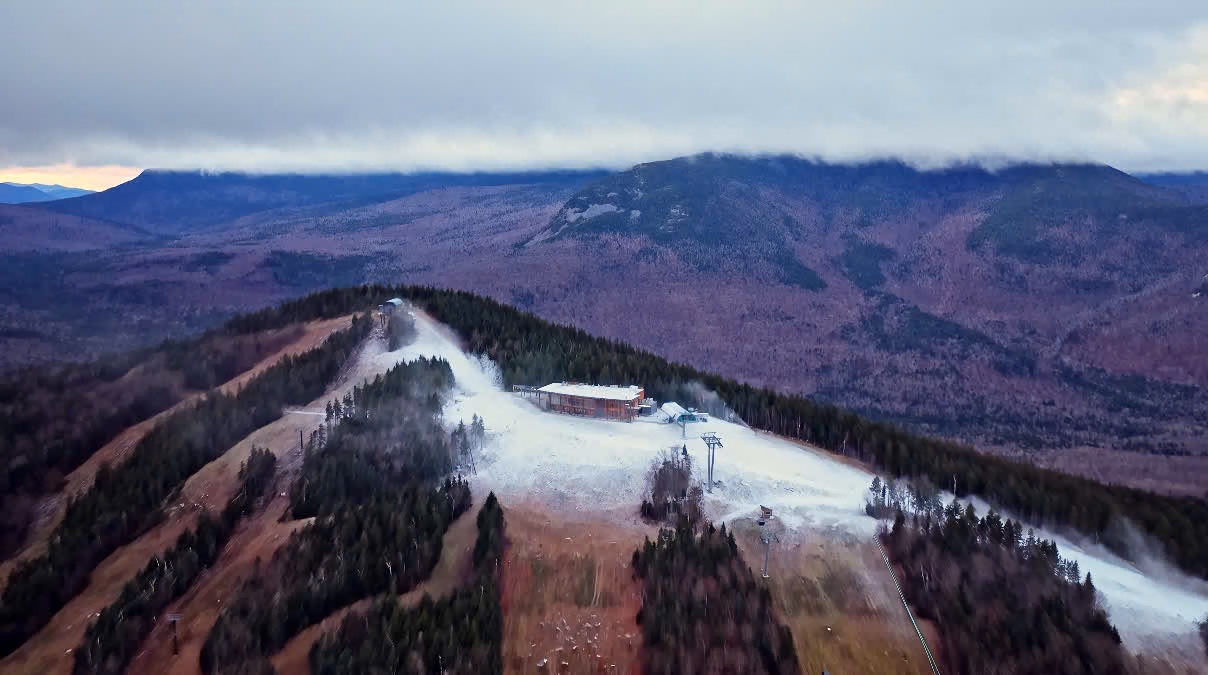
When the cold settles across the ranges of New England, the mountains take on a different rhythm. In the valleys of New Hampshire, nights grow longer, temperatures drop below freezing, and while autumn still lingers in the final copper hues of the White Mountains, the resorts begin preparing their own version of winter.
It is then that one of the season’s most captivating spectacles begins: snowmaking.
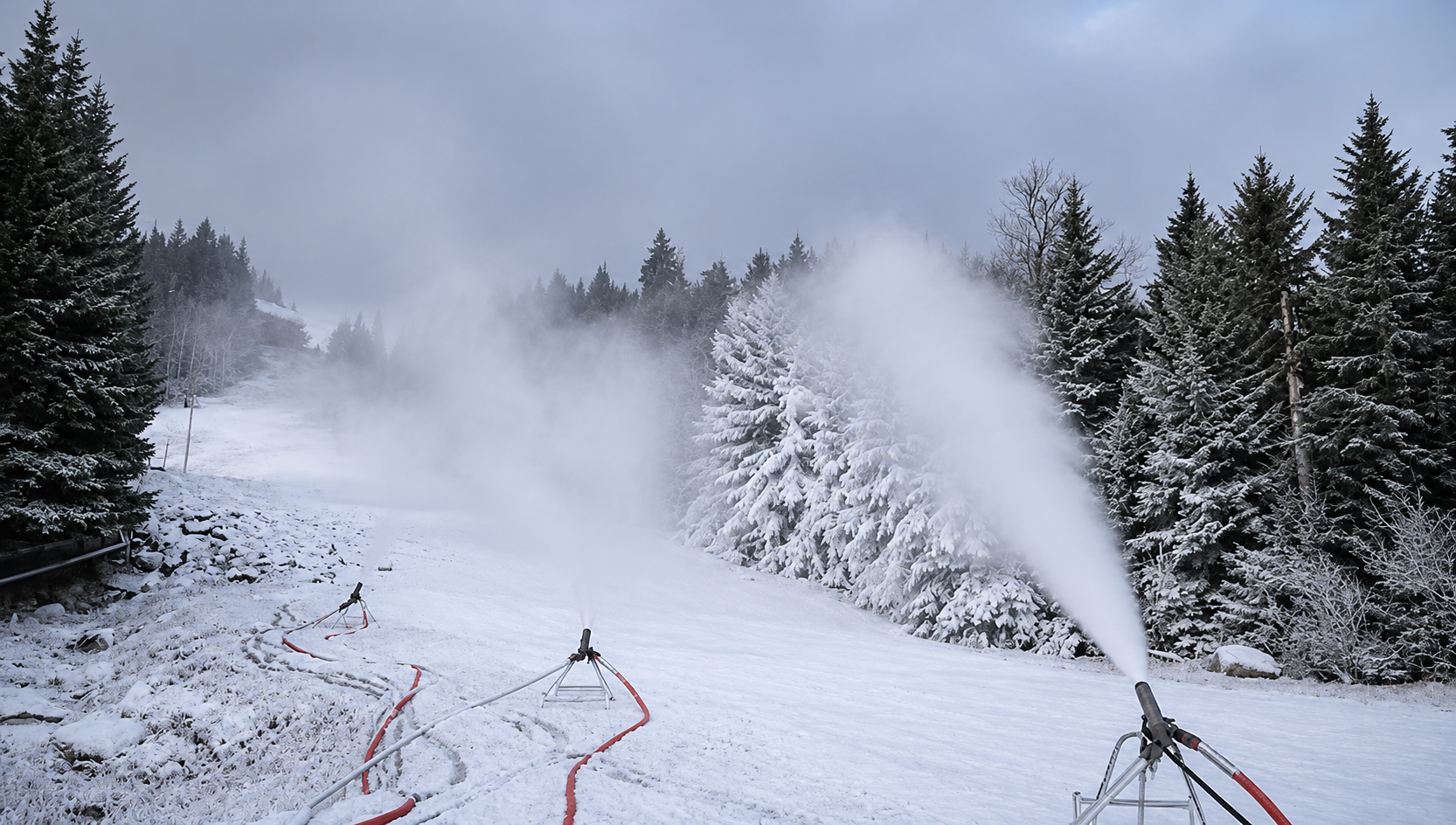
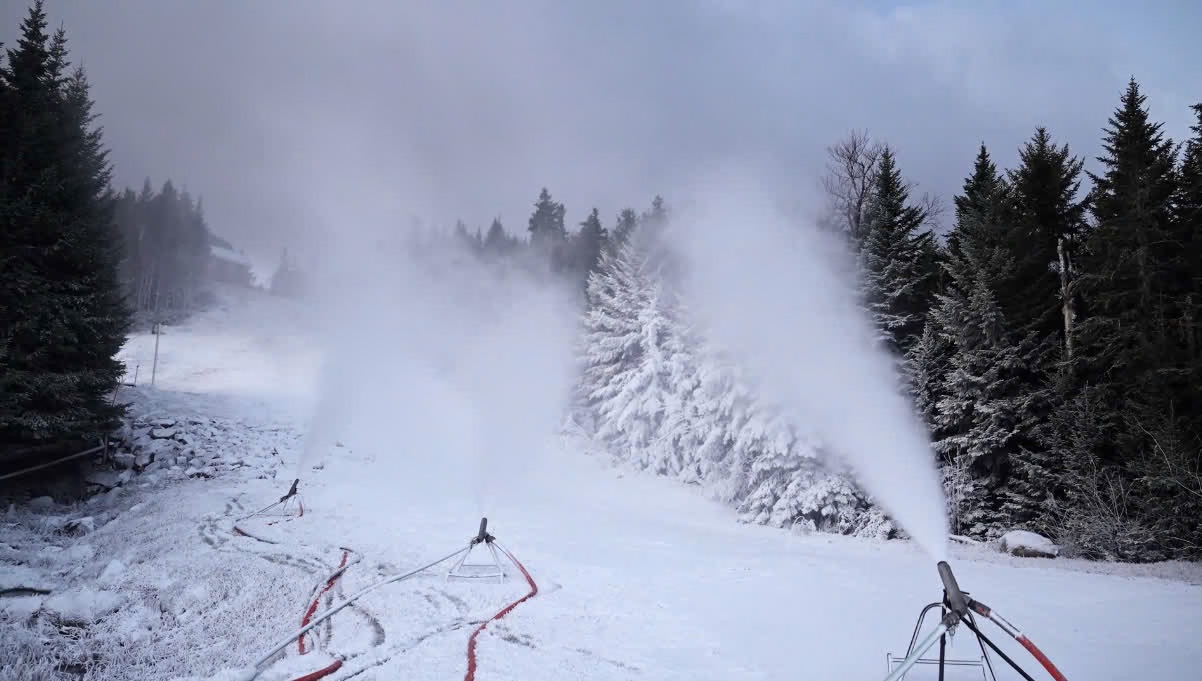
Under the glare of floodlights, snow guns roar to life, progressively transforming millions of liters of water into a fine white blanket. From afar, the plumes of snow suspended over the slopes appear almost natural. Up close, they reveal a process where meteorology, engineering, and precision operate in unison.
The Perfect Window
Making snow depends on something far more precise than mere sub-zero temperatures.
The deciding factor is the wet-bulb temperature, which combines temperature and relative humidity to determine whether tiny water droplets can freeze before reaching the ground. The drier and colder the air, the easier that transformation becomes.
That is why frigid nights become genuine windows of opportunity for mountain crews.
Snow guns atomize water into thousands of micro-droplets, projecting them high into the air. During those seconds of flight, the freezing air does the rest: the droplets freeze and settle onto the slopes as ice crystals.
The result may appear effortless. The process, however, is an exercise in absolute precision.
A Factory on the Mountain
At one of New Hampshire’s largest winter resorts, this transformation takes on an especially spectacular scale.
During the first nights of sustained sub-zero temperatures, operations teams work in shifts to blanket the resort's priority areas. Snow guns are strategically deployed across the trails and calibrated according to weather conditions.
Pressure, flow rate, temperature, humidity, wind direction, and snow quality all form part of an ever-shifting equation.
No two snow guns operate identically, nor do all sections of the mountain require the same output.
Certain systems are engineered to produce massive volumes when temperatures drop low enough; others allow operations to proceed in more marginal conditions. Efficiency is equally essential: maximizing every cubic meter of water and converting it into the greatest possible volume of usable snow.
The Landscape Shifts Overnight
And it is precisely here that the process turns into a spectacle.
When night falls over the White Mountains, the slopes remain empty. No skiers, no turning lifts, no activity on resort terraces. Only the steady hum of machinery breaks the silence.
Floodlights illuminate towering plumes of snow as the final colors of autumn slowly vanish beneath the white.
It is a sight rarely witnessed by day: a ski resort running at full throttle while ostensibly still dormant.
Crews patrol the trails, monitor snow depths, and adjust gun settings as temperatures fluctuate. For several hours, the mountain turns into an immense open-air factory.

Laying the Base Layer
The initial snow serves far more than an aesthetic purpose.
Building a resilient base is essential to preparing the pistes before winter arrives in earnest. Man-made snow typically features a denser structure than natural snow, creating a durable foundation designed to anchor future natural storms.
That is why early snowmaking sessions focus heavily on strategic zones: upper elevations, primary thoroughfares, and key corridors where an adequate base is vital to secure opening day.
Natural snow will follow. New layers will accumulate, temperatures will shift, and the first skiers will finally arrive.
Yet the season will have begun long before.
When Winter Is Manufactured
There is something almost hypnotic about observing a resort during these initial freezing nights. The mountain still belongs to autumn, yet the machinery is already forging the landscape that will define the months ahead.
In New England, where the White Mountains offer one of the great winter backdrops of the American Northeast, this process forms part of a ritual renewed every season.
Millions of liters of water. Rigorously calculated temperatures. Crews laboring through the night. And a succession of airborne micro-droplets that, in mere moments, freeze into snow.
SOURCES
New Hampshire Ski Area Association · [POWDER MAGAZINE]