%20--%3e%3cdefs%3e%3cstyle%3e%20.st0%20{%20fill:%20%231d1d1b;%20}%20%3c/style%3e%3c/defs%3e%3cpath%20class='st0'%20d='M174.5,69.9c-2.1-4.9-5.6-10.7-10.4-17.3-4.9-6.6-11-13.3-18.2-20-8.3-8.3-17.9-14.7-28.8-19-10.9-4.4-21.9-6.6-33-6.6s-23.7,2.7-33,8.1c-6.4,4.4-11.6,10.3-15.1,17.7-3.7,7.3-5.4,15.2-5.4,23.6,0,32.9,22.7,53.8,68,62.6,35.6,7,60.4,17.4,74.7,31.3,14.2,13.9,20.5,32.9,18.7,57-1.3,25.5-10.7,44.2-28.2,56.3-17.4,12.2-38.5,18.4-62.8,18.7-20-.2-38.3-3-55.2-8.1-16.9-5.2-31.2-12.6-43.1-22.1l-1.1-67.7c7.2,22.8,19.5,42,36.8,57.6,17.2,15.6,36.3,25.6,57.3,29.9,7.6,1.6,14.8,2.3,21.8,2.3,17.1,0,31.1-4.2,42.2-12.7,11-8.4,16.6-21.2,16.6-38.3s-6.4-30.7-19.5-43c-13-12.3-36.5-22.2-70.4-29.8-29.3-6.4-49.3-16.2-60.1-29.3-10.8-13.1-15.9-29.1-15.3-48,.2-14,4.2-26.3,12-37.1s18.4-19.2,31.9-25.2c13.4-6.1,28.8-9.1,45.9-9.1s28.2,1.9,41,5.7c12.8,3.8,23.7,8.3,32.5,13.8l.8,49h-.3Z'/%3e%3cpath%20class='st0'%20d='M269.3,250c0,11.1,3.7,18.4,10.9,22,7.2,3.4,14,5.2,20.2,5.2h-90.2c6.2,0,12.9-1.8,20-5.2,7.1-3.4,10.7-10.8,10.7-22V32.1c0-11.1-3.4-18.4-10.4-22-7-3.4-13.8-5.2-20.2-5.2h90.2c-6.4,0-13.3,1.8-20.5,5.2s-10.7,10.8-10.7,22v217.7h0ZM403.9,236.7c8.8,11.4,17.7,20.5,26.7,27.2,8.9,6.8,16.8,11.2,23.6,13.6l-53.7-.8c-9.1-8.3-18.2-18.6-27.6-30.7l-73.1-94.9c-2.3-3.1-5.3-4.7-8.9-4.7-6,0-12.4,3.7-19.5,10.9l90.6-108.5c5.7-6.8,8.6-13.4,8.6-20.2s-2-11.1-6-15.3-9.2-6.9-15.8-8h80.5c-2.3,0-7.6,1.7-15.8,5-8.1,3.3-17.7,9.9-28.6,19.5-4.9,4.4-13.1,13.6-24.7,27.6-11.6,14-21.6,26.3-30.1,36.9l-6.2,7.8c-5.7,5.7-8.6,11.1-8.6,16.3s1.9,8.4,5.8,13.6l82.8,104.6v.2Z'/%3e%3cpath%20class='st0'%20d='M516.2,248.4c0,11.7,3.7,19.3,11.1,23.1,7.3,3.8,14.3,5.7,20.8,5.7h-91.4c6.4,0,13.3-1.9,20.6-5.7s10.9-11.4,10.9-23.1V33.7c0-11.9-3.7-19.7-10.9-23.3s-14.1-5.4-20.6-5.4h91.4c-6.4,0-13.4,1.8-20.8,5.4-7.3,3.7-11.1,11.4-11.1,23.3v214.6h0Z'/%3e%3cpath%20class='st0'%20d='M770.2,243.3c4.9,13,10.8,21.7,17.4,26.2,6.8,4.6,12.7,7.1,17.9,7.6h-88.2c6.8-.8,12.4-2.9,17.1-6.2s7-8.1,7-14.3-.8-7.6-2.3-11.7l-28.8-80.9h-91l-25.7,70c-2.9,7.2-4.2,13.6-4.2,19,0,14.6,9.7,22.6,29.1,24.1h-72.4c8.8-.6,16.9-4.7,24.3-12.4,7.3-7.8,13.8-18.9,19.2-33.5L678-3.2l1.1,3.4,91,243.1ZM658.7,59.8c-1.9,4.4-4.6,11-8,19.8l-29.6,80.5h87.5l-30.7-87.5c-2.9-7.8-5.2-13-7.2-15.6-1.9-2.6-3.8-3.9-5.7-3.9s-4.4,2.2-6.4,6.6h.1Z'/%3e%3cpath%20class='st0'%20d='M1008.6,243.3c4.9,13,10.8,21.7,17.4,26.2,6.8,4.6,12.7,7.1,17.9,7.6h-88.2c6.8-.8,12.4-2.9,17.1-6.2s7-8.1,7-14.3-.8-7.6-2.3-11.7l-28.8-80.9h-91l-25.7,70c-2.9,7.2-4.2,13.6-4.2,19,0,14.6,9.7,22.6,29.1,24.1h-72.4c8.8-.6,16.9-4.7,24.3-12.4,7.3-7.8,13.8-18.9,19.2-33.5L916.3-3.2l1.1,3.4,91,243.1h.1ZM897.1,59.8c-1.9,4.4-4.6,11-8,19.8l-29.6,80.5h87.5l-30.7-87.5c-2.9-7.8-5.2-13-7.2-15.6-1.9-2.6-3.8-3.9-5.7-3.9s-4.4,2.2-6.4,6.6h.1Z'/%3e%3cpath%20class='st0'%20d='M1241.1,244.5c4.9,8.6,11,15.6,18.1,21s14.1,9.3,20.8,11.7h-47.8c-8-8-16.9-20.8-26.5-38.1l-37.3-63c-7.6-12.7-15.7-21-24.3-24.9s-19.6-5.8-32.5-5.8h-12.4v107.7c0,9.9,3.3,16.3,9.9,19.5s12.9,4.7,18.9,4.7h-87.9c6.4,0,13.2-1.8,20.2-5.2s10.4-10.8,10.4-22V32.1c0-11.1-3.6-18.4-10.7-22-7.1-3.4-13.8-5.2-20-5.2,10.3,0,25.5-.2,45.1-.8l37.7-.3c29,0,51.5,2.1,67.2,6.4,15.8,4.2,27.5,12.9,35,25.9,6.2,9.9,9.3,21.9,9.3,36.1s-2.4,22.2-7.3,32.5c-4.9,10.2-11.7,18.4-20.2,24.7-5.4,3.9-11.7,7.2-18.7,9.9s-13.4,4.3-19.5,4.9c4.7,1.3,9.6,4.2,14.8,8.9,5.2,4.7,11.1,13,17.9,24.9l39.7,66.5h0ZM1187.6,120.5c12.3-12.2,18.4-28.1,18.4-47.8s-7.4-42-22.3-51.6c-14.9-9.4-36.7-14.2-65.1-14.2s-15,.1-19.5.3v134.1c9.3,0,21.6-.2,36.6-.8,22.3-1.3,39.6-8,51.9-20.2h0Z'/%3e%3c/svg%3e)


The American opens the 2026/27 Alpine Ski World Cup with her maiden career victory, on a day marked by challenging conditions on the Rettenbach glacier, Van Deer's debut on the women's circuit, and a second run that completely upended expectations.
The Alpine Ski World Cup has returned to Sölden with one of those results that recall why this sport remains so unpredictable. At 32 years of age and after 148 starts without a win, Paula Moltzan clinched the opening giant slalom of the 2026/27 season by a mere hundredth of a second. She did so on the Rettenbach glacier, fighting back from fifth place while debuting equipment from Van Deer, the brand associated with Marcel Hirscher. A convergence of circumstances that makes her triumph far more than just the first victory on the calendar.
The American arrived in Austria with ten World Cup podiums, an established track record among the top specialists, and one piece of unfinished business: winning. Sölden seemed, initially, a challenging stage on which to settle it. After the first run, Mikaela Shiffrin led the standings by 0.59 seconds over her compatriot. Yet the second run transformed the race into an exercise in adaptation, aggression, and risk management. Snow, wind, and deteriorating visibility proved decisive on a day when the favourites were unable to defend their positions.
A HUNDREDTH OF A SECOND THAT CHANGES A CAREER
Moltzan approached the second run with a clear strategy: attack. As conditions deteriorated on the upper section and the light faded, the American committed to an aggressive line, particularly on the steepest pitch. Her descent was not flawless, losing part of her accumulated advantage through the final sector, but it proved enough to edge ahead of Lara Colturi, who had delivered a remarkable fightback from sixth position.

The difference between them was 0.01 seconds—the slimmest margin in alpine ski timing and, this time, what separated Moltzan from another missed opportunity.
Four racers were still left in the start gate, including first-run leader Shiffrin and several top podium contenders. None managed to eclipse Moltzan’s time. The American transitioned from waiting in the finish area to celebrating the victory she had chased for years.
The result carries particular weight given the timing in her career. At 32, when many of the circuit’s premier figures have already amassed their greatest triumphs, Moltzan proved that experience, perseverance, and adaptability remain decisive in elite performance. Her victory comes, moreover, on the heels of a major equipment switch, ushering in an entirely new chapter.
VAN DEER TAKES THE STAGE WITH A HISTORIC VICTORY
Moltzan's triumph also carries significant implications for the ski industry. Sölden was her first race on Van Deer, and simultaneously the brand's first women's appearance at the elite World Cup level. The outcome could hardly have been better: a debut victory on one of the most visible stages of the alpine calendar.
The brand spearheaded by Marcel Hirscher continues to expand its footprint in international competition—a domain where equipment performance is both an athletic imperative and a vital positioning tool. On a circuit historically dominated by manufacturers with decades of pedigree, securing immediate results provides substantial validation for any project aspiring to cement its place among the sport’s leading names.
Moltzan conceded after the race that she never imagined claiming her maiden victory right on her equipment debut. Beyond the symbolism, the outcome injects an intriguing dimension into the season opener: gear switches can trigger immediate competitive ramifications and disrupt balances once thought established.
Nor was it the only noteworthy debut. Lara Colturi, racing on Head this season, secured second place following an exceptionally demanding final run. Two skiers on new equipment thus claimed the top two steps of the opening podium.
LARA COLTURI AND EMMA AICHER CONFIRM THE GENERATIONAL SHIFT
At just 19 years old, Lara Colturi demonstrated once again that her rise is more than just hype surrounding her talent. The skier representing Albania began the second run in sixth place, finding the requisite pace to charge up to second, finishing agonizingly close to victory.
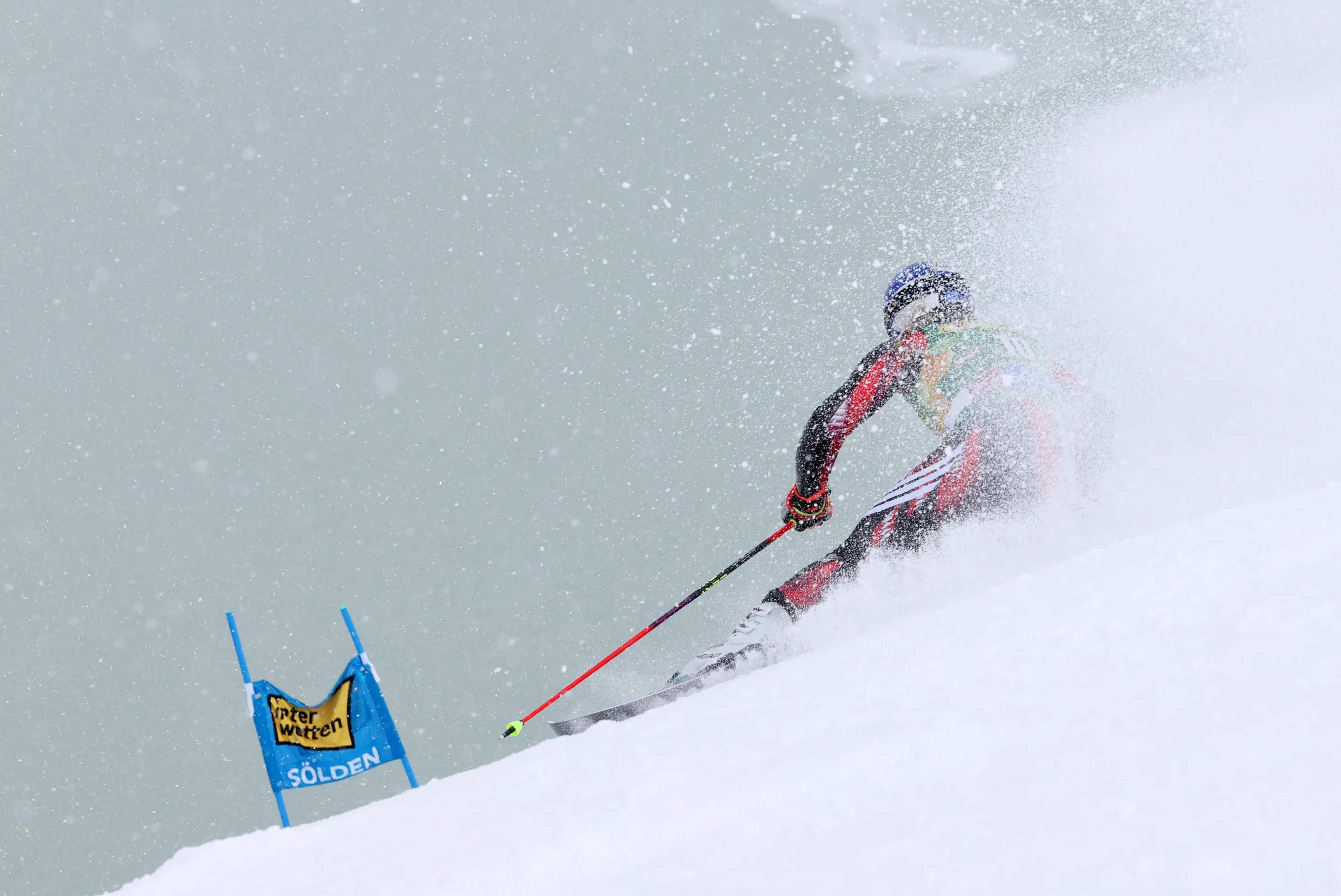
Her run was all the more remarkable given the slope conditions. Battling flat light, wind, and an increasingly rutted surface, Colturi posted the third-fastest time of the second run. Her ability to carry speed in such demanding circumstances confirms she possesses the depth of skill required to challenge for top honors even when conditions are far from ideal.
Third place went to Germany’s Emma Aicher, 22, who delivered one of the day’s most compelling performances. Starting from ninth position, she clinched her first World Cup podium in giant slalom—a discipline previously outside her primary strengths.
The duo's performance sets an important tone for the start of the winter. The next generation is not merely gaining presence on the leaderboards; they are discovering the competitive consistency needed to challenge the reign of the established specialists.
SHIFFRIN LOSES THE LEAD IN AN UNPREDICTABLE SECOND RUN
The day's principal athletic heartbreak belonged to Mikaela Shiffrin. The American had laid down an extraordinary first run, braving some of the fiercest gusts on the upper slope to lead the field.
Her advantage seemed ample to approach the second leg with formidable victory prospects. However, conditions shifted markedly, and Shiffrin, running last out of the gate, failed to find the necessary rhythm. Errors mounted and time slipped away continuously until she crossed the line in seventh place.
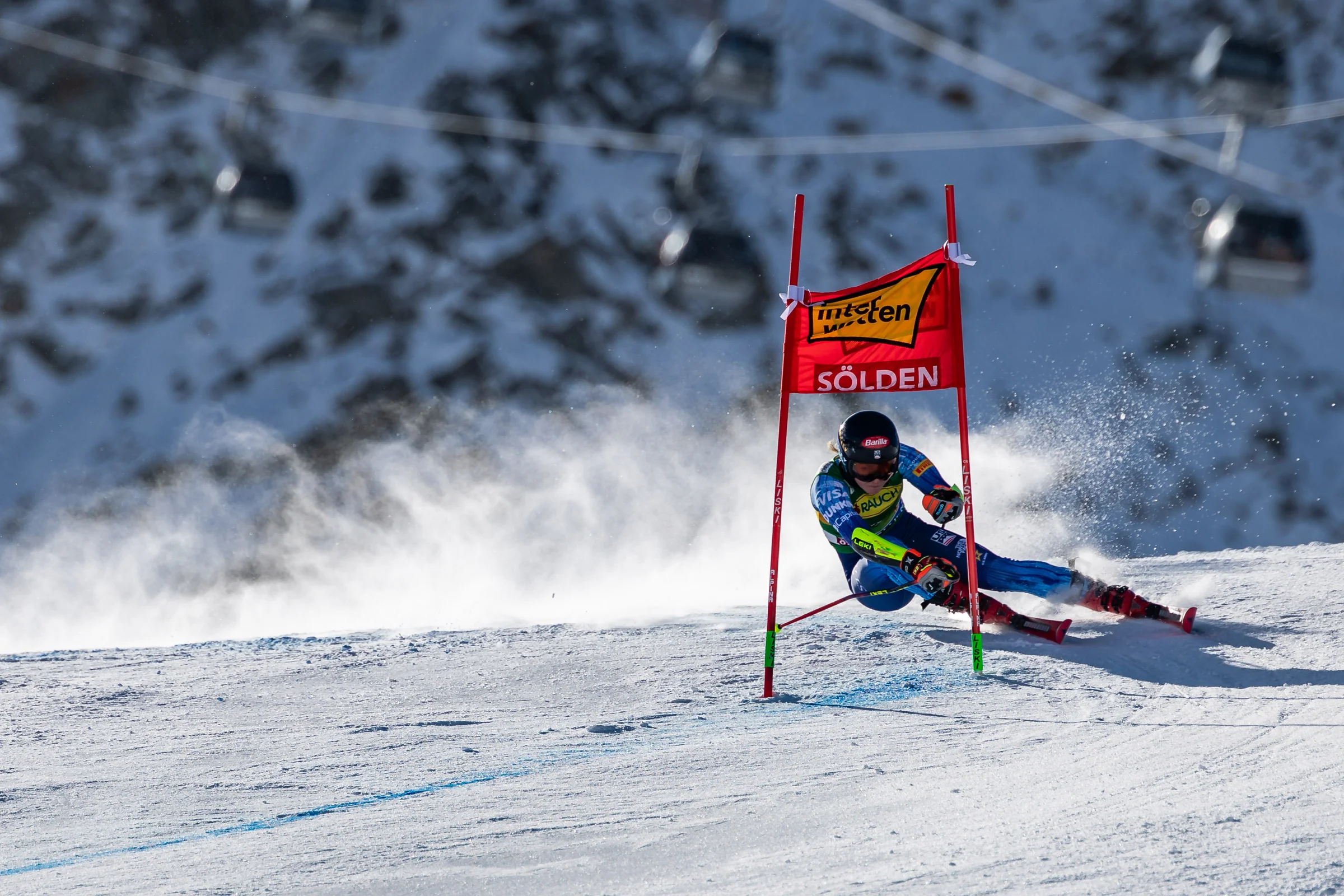
The result denied her a 111th World Cup victory and prolonged her wait to triumph in giant slalom once more—a feat that has eluded her for nearly three years.
The race held added intrigue given Shiffrin’s competitive strategy for this season, where she aims to place greater emphasis on giant slalom and super-G while partly scaling back her slalom focus. Sölden offers an ambivalent initial verdict: her first-run speed confirms her ceiling, yet highlights the challenge of sustaining that standard when race conditions shift dramatically.
Sara Hector finished fourth and Camille Rast sixth, both surrendering ground from the opening run. Nor was it the expected start for Julia Scheib, reigning giant slalom World Cup champion and winner in Sölden last year, who was eliminated after skiing out on her first run.
THE RETURN OF PETRA VLHOVÁ, ANOTHER KEY STORY OF THE DAY
Amid the opening giant slalom results, one storyline commanded its own spotlight. Petra Vlhová returned to the World Cup after a 1,008-day injury hiatus, ending an extensive absence from competition.
The Slovakian, slalom Olympic champion at Pekín 2022, showed promising form in her opening run, finishing eleventh. The treacherous conditions of the second run eventually dropped her to 23rd, though the sporting outcome took a back seat to the sheer significance of her return.
Her presence restores one of alpine skiing's defining figures of recent years to the circuit, adding renewed intrigue to a season unfolding with numerous competitive question marks.
SÖLDEN OPENS A WINTER DEVOID OF SET HIERARCHIES
The women’s giant slalom in Sölden delivered far more than an unexpected victor. Moltzan’s win, the emergence of Colturi and Aicher, the gear transitions, and the struggles of established favorites paint an open beginning to the season, where margins appear razor-thin.
It also reaffirms the enduring significance of the opener on the Rettenbach glacier. Sölden does not crown a World Cup champion, but it delivers the first true benchmark after months of preparation, technical testing, and paddock shifts.
For Paula Moltzan, the result marks a career turning point. After ten podiums and 149 starts, the American finally claims the missing victory in her resume. And she achieved it at the most high-profile moment of the early season, on new skis, and against the world’s finest racers.
The 2026/27 World Cup season has only just begun, but Sölden has already sent a message: the hierarchies of last winter guarantee nothing once the clock starts ticking again.